Review samples
Measure the bottle, neck, pump head and tube; record variation and packing method.
Personal care packaging
Machinery for placing and tightening lotion pumps used on hand wash, moisturiser, shampoo, conditioner and liquid soap packs.
The engineering challenge
Lotion pumps combine a long flexible dip tube, a threaded collar and a head that may need to face a defined direction. The bottle can also be light or unstable before the closure is secured.
For short runs, an operator can insert and start the pump before a semi-automatic tightening cycle. For sustained output, use a dedicated pump feeder/placer with an inline or rotary capper.
Recommended process
Start with pack behaviour and acceptance criteria, then select the machine architecture that can sustain the production requirement.
Measure the bottle, neck, pump head and tube; record variation and packing method.
Confirm tube entry, thread start or assembly force with realistic filled-weight bottles.
Choose manual, semi-automatic or bulk-fed presentation based on output and format stability.
Set the tightening or assembly method, bottle support and required change parts.
Document rate, torque, orientation, leaks, damage, rejects and changeover tests.
Suitable configurations
These are starting points. Final selection follows a review of the complete format matrix and production targets.
Automatic inline configuration
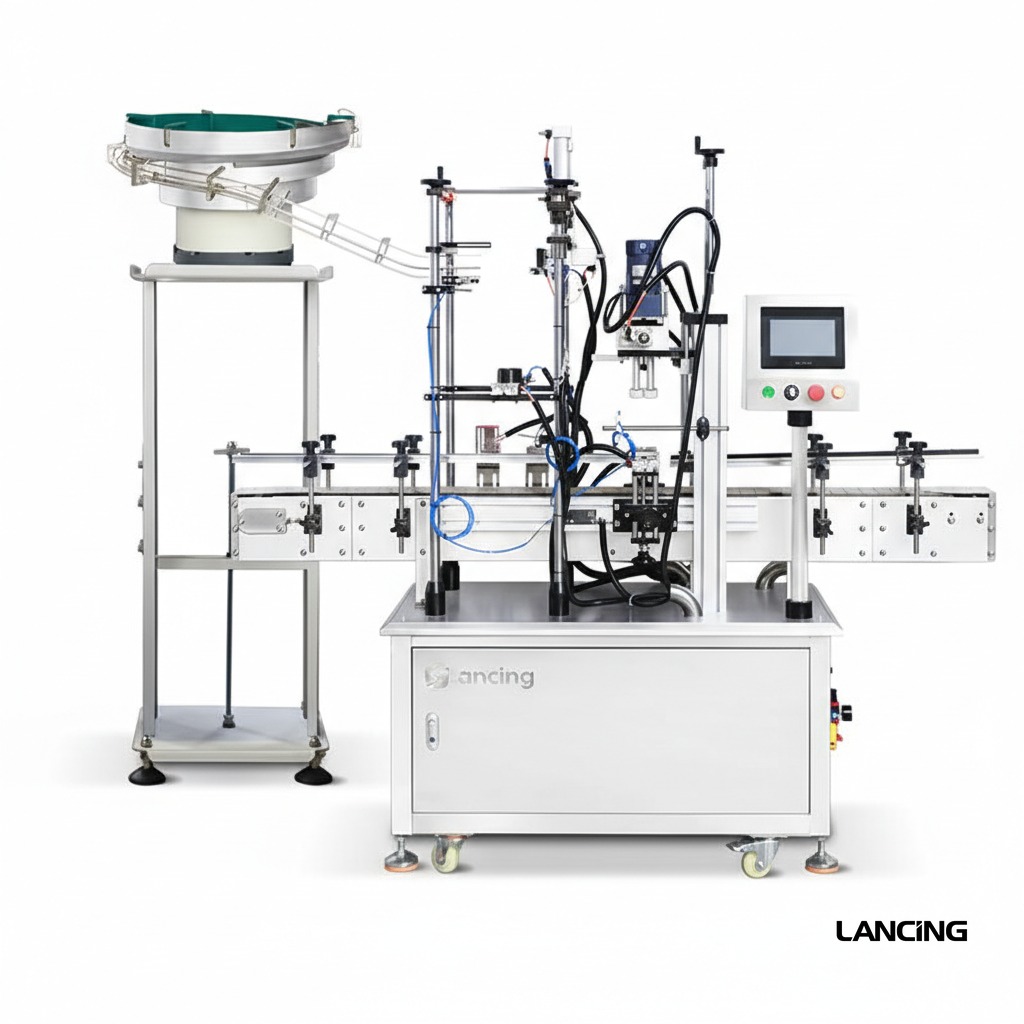
An automatic in-line system for placing and tightening pump closures, with bottle handling, closure transfer and powered capping in one compact production cell.
View machine detailsSemi-automatic configuration
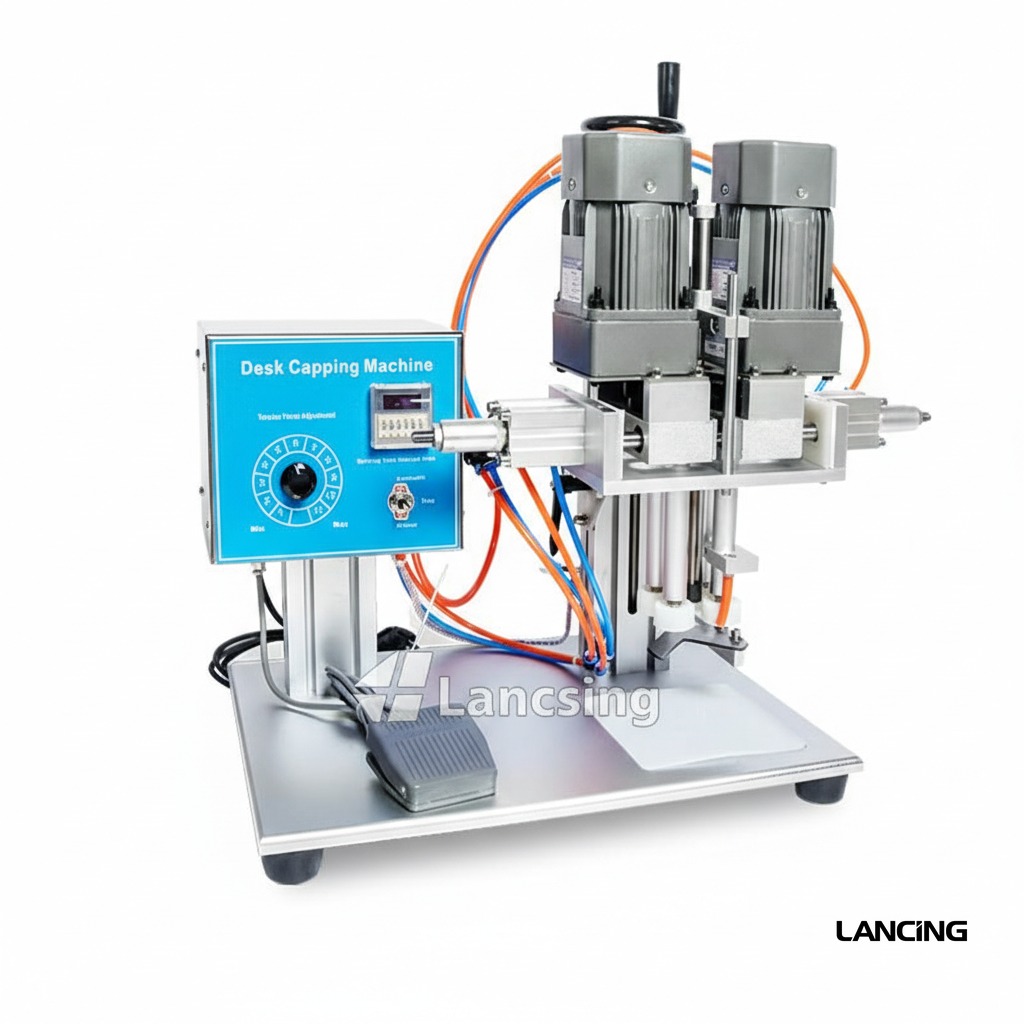
A compact pneumatic capping machine for operators who manually place pump closures and need faster, more repeatable tightening than hand capping.
View machine detailsPump-cap feeding configuration
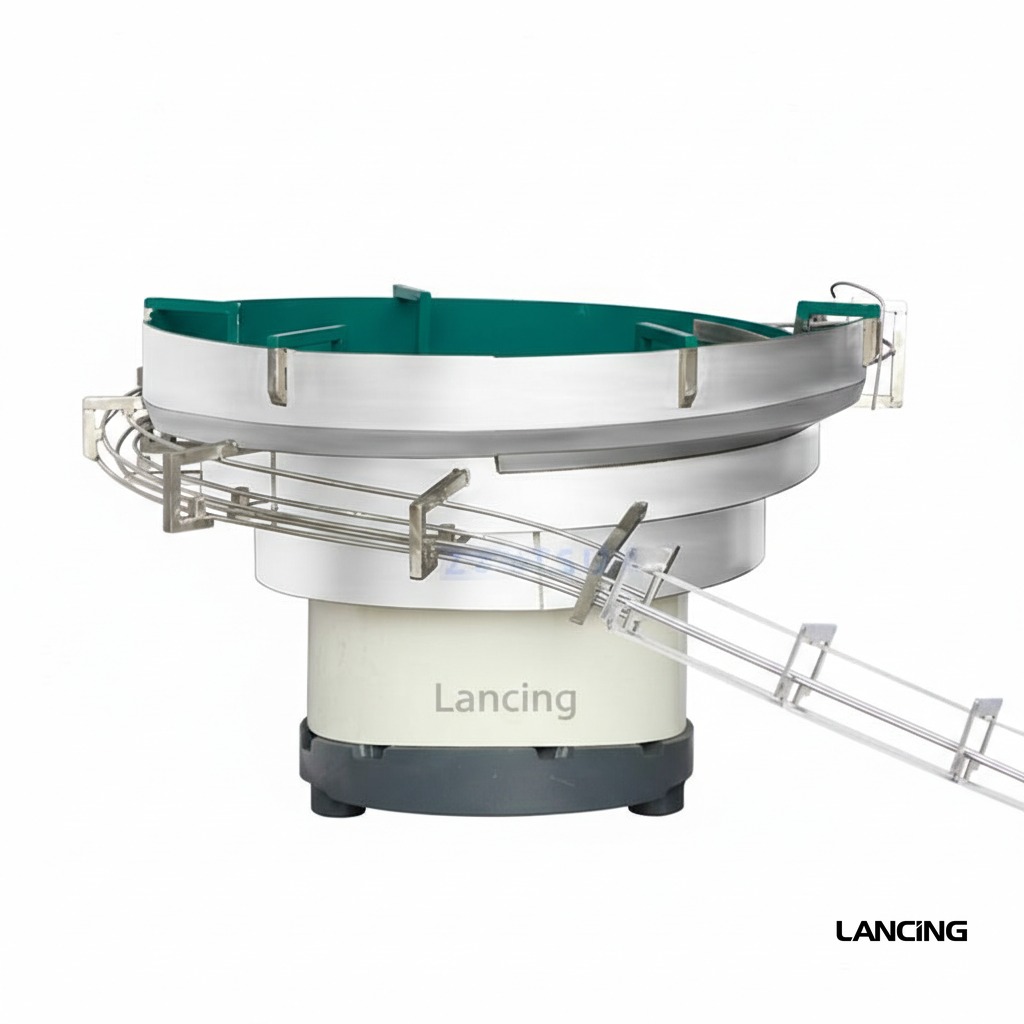
A dedicated machine for automatically presenting, picking and placing pump closures before a separate tightening station or integrated capping section.
View machine detailsPractical answers
Every pump format behaves differently. Final machine selection and performance are confirmed through sample review and agreed trials.
The choice depends on sustained output, batch length, pump presentation, bottle stability and the number of formats. Short runs often suit operator-assisted placement; consistent higher-volume work may justify automatic feeding, placement and tightening.
Potentially, but each design must be assessed as a complete format. Change parts or different feeding methods may be required where actuator shape, tube length, collar size or bottle geometry changes materially.
Enough components are needed to represent normal manufacturing and packing variation and to complete the agreed trial. The quantity depends on the feeding concept, target output and acceptance test.
Yes, through suitable contact materials, controlled guide pressure and format-specific support. Trials should use production-labelled, coated or printed bottles where cosmetic quality is important.
Next step
Share the bottle and closure formats, target output, current process and required acceptance criteria for a focused machinery review.
Compatibility evidence
Lotion pumps used on soaps, shampoos, moisturisers and personal-care liquids must enter the neck cleanly, tighten securely and retain the required actuator condition without visible damage.
State whether pumps arrive locked, unlocked or in mixed condition and whether the finished actuator must point towards a label panel. Feeding and capping should not unlock a pump unintentionally or apply force through a decorative actuator.
Compare tube length and retained curve with the bottle neck and shoulder. A tube that is only slightly longer or softer can fold, catch or push the collar off square. Trial components should come from normal supply and include the expected dimensional variation.
Define acceptable marks on collars, actuators, labels and decorated bottles. Approve the machine contact points and grip material. Filled weight or safe ballast should be representative because light empty bottles may behave differently from saleable packs.
Product residue on bottles or pumps can change friction and obscure sensors. Identify wipe-down points, acceptable cleaning materials, format parts and first-off checks. Record the approved head, bottle support and settings by format.
Project review
Send finished bottles, pumps from normal supply, tube dimensions, presentation requirements and target output for a sample-led review.
Finished-pack acceptance
The closing result should protect the product and preserve the presentation expected by the customer. Tube entry, collar position, actuator state and cosmetic condition need to be considered in the same trial.
| Check | What to define | Evidence from the trial |
|---|---|---|
| Dip-tube entry | Approved tube lengths, cut condition, retained curve and bottle-neck clearance. | No folding, catching, missed neck or tube damage on the worst-case approved format. |
| Thread start and collar seating | How the pump is held square and the accepted closure-height condition. | No cross-threading, tilted collar or abnormal gap after the capping cycle. |
| Actuator lock state | Whether pumps arrive and must leave locked, unlocked or in a specified condition. | The machine does not unintentionally operate or damage the actuator. |
| Nozzle or actuator direction | Whether a final direction is required relative to the label or bottle panel. | Directional tolerance is measured using an agreed reference, not judged informally. |
| Cosmetic contact | Permitted marks on the collar, actuator, label, print, coating and bottle surface. | Machine contact points remain within the approved appearance standard. |
| Closure security and leakage | Torque or removal-torque method, handling test and any product-specific leak check. | Results are recorded against the agreed method and acceptance limits. |
| Dispensing readiness | Any customer requirement for first operation, unlock action or priming assessment. | The test is performed only where it forms part of the approved pack specification. |
Empty bottles can be lighter and less stable than filled packs, while safe ballast may change the way a soft bottle reacts to guides or side belts. Provide the intended filled weight and identify any product that can remain on the neck or collar after filling. Residue may affect grip, sensors and the consistency of thread engagement.
Use production labels, printing, coatings or sleeves where surface marking matters. Pumps should arrive in the same bags, trays or cartons used in routine supply so retained tube curve, interlocking and actuator condition can be observed. A carefully hand-selected sample set is not a substitute for normal bulk presentation.
Group bottles and pumps only where the neck, collar, actuator, tube and bottle-support requirements are genuinely similar. A new fragrance, label or fill volume may appear to be a minor commercial variation but can alter bottle friction, filled weight or the required final actuator direction. Record which tooling and settings apply to each combination.
This page focuses on lotion, soap, shampoo and related pump bottles. Where a premium skincare pack is driven by decorative surfaces, presentation and small-format dispenser geometry, compare the cosmetic dispenser pump application. For measurement planning, use the pump cap torque and quality-control guide.
Lotion-pump review
Send production bottles, pumps, tube details, filled-weight condition and presentation criteria for a focused capping-machine review.
Project path
Define whether the actuator must remain locked, face a label datum or leave ready for a later operation. Include the longest and most curved tubes, decorated bottles and representative filled weight in the trial. Use the actuator guide and compatibility guide to prepare the pack.
For stable campaigns, compare automatic feeding and inline capping; for short varied runs, assess operator placement with controlled tightening. The capacity guide ensures the comparison includes replenishment, quality work and accepted packs.
Lotion-pump questions
Lotion pump projects often combine long tubes, directional actuators and appearance-sensitive packs, so the quality plan must cover more than closure tightness.
Tall proportions, a small base, flexible sidewalls, asymmetric shoulders and slippery or decorated surfaces can all reduce stability. Filled weight can improve or worsen behaviour depending on the centre of mass and how side guides contact the bottle.
Trials should reproduce production weight and use the final label, print or coating where contact marks matter. Support should hold the neck square without deforming the container.
Contact materials, guide pressure, chuck geometry and the number of sliding contacts should be selected around the finished decoration and pump surface. A component can pass dimensional testing and still fail the cosmetic standard if it scuffs under production pressure.
Use saleable labelled, printed or coated samples during trials and define acceptable appearance under consistent lighting. Record which contact points are permitted and which must remain mark-free.
Yes. A pump supplied locked, unlocked or in a defined transport position can present different clearances, gripping surfaces and orientation requirements. The lock state can also change during tightening if actuator rotation is not controlled.
State the required incoming and finished condition, the acceptable final direction and how the result will be checked. The machine route should be trialled with pumps supplied in the normal production state.
Typical checks include pump presence, square seating, closure height, thread engagement, required actuator direction or lock state, leakage or seal function, dispensing function where agreed and cosmetic condition. Torque or removal torque may support the plan but should not be the only acceptance measure.
The exact checks and sample frequency depend on the pack and quality system. Define them before trial so machine settings are judged against an agreed finished product.
Practical next step
Lancing can review decorated bottles, pumps, required direction and the quality checks needed before recommending the capping route.
Closure-family boundary
A foaming pump may use a larger actuator and collar, a different lock or transport condition and a different functional acceptance check. Those changes can alter the gripping point, head clearance, bottle support and the way the pump is presented to the neck.
Where one line is expected to handle both families, include representative decorated bottles, normal filled weight, the supplied pump condition and the required final actuator state for each format. Use the foaming-pump application guide before deciding whether the same feeder, placement head and capping tooling can be shared.
Pack-integrity evidence
A lotion-pump collar can feel tight and still be tilted, cross-threaded or seated against the wrong surface. Leakage can also originate in the pump mechanism, bottle finish, gasket, product on the threads or the conditions used during storage and transport. Preserve failed samples and identify the first wet point before retightening them.
The bottle material affects the investigation. A flexible HDPE bottle may deform under side pressure, a light PET bottle may become unstable during placement, and a glass bottle changes impact and breakage risk. Use the final decoration and representative filled weight when contact marks or centre of mass matter.
Use the pump-bottle leak diagnosis guide to separate possible leak paths, and compare PET, HDPE and glass pump-bottle capping before approving one bottle-control setup for the whole range.