
Characterise
Record material, wall behaviour, footprint, neck, decoration and filled condition.
Bottle-material compatibility
Choose bottle support, pump placement and tightening around the way the real container behaves under side grip, neck load and capping contact.
Direct answer
PET, HDPE and glass bottles can use similar threaded pump closures, but they do not react to guides, side belts, chucks, axial load and conveyor pressure in the same way. A suitable machine is therefore specified from the complete bottle-and-pump format, not from the neck finish or pump collar alone.
Material is only the starting point. Wall thickness, shoulder shape, base footprint, filled weight, decoration, neck geometry and the position of the centre of mass can matter more than the material name. Representative samples should reproduce the final saleable pack condition wherever practical.
Qualification sequence
Use the least stable, most flexible or most cosmetically sensitive approved format as part of the trial rather than relying on one easy cylindrical bottle.
Record material, wall behaviour, footprint, neck, decoration and filled condition.
Keep the bottle square through tube insertion, thread start and tightening.
Set guides, belts, pucks or fixtures so the pack is held without damage.
Prove pump placement, pre-threading and tightening across normal variation.
Check seating, appearance, leakage, direction and function using agreed methods.
Material comparison
The same material can behave differently when bottle geometry, wall distribution, fill weight or decoration changes.
| Bottle family | Typical behaviour to assess | Capping-line implication | Trial evidence |
|---|---|---|---|
| PET bottle | Often light and resilient, with stability and surface behaviour governed by shape, wall distribution and fill weight. | Use controlled guide pressure, appropriate neck or body support and enough conveyor control to prevent tipping or rotation. | Final bottle, label or print, representative filled weight and the most unstable approved format. |
| HDPE bottle | May have flexible panels or a squeezable body, and can change shape under side pressure. | Spread contact loads, avoid excessive belt pressure and check that gripping does not alter thread alignment or sensor readings. | Production-intent moulding, filled or safely ballasted condition, surface finish and any product residue expected near the neck. |
| Glass bottle | Rigid and often heavier, but vulnerable to impact, chipping, breakage and cosmetic contact damage. | Control bottle-to-bottle contact, use stable transfers and ensure fixtures or pucks do not create local shock or point loading. | Production glass, neck-finish variation, decoration, accepted contact areas and line-stop behaviour. |
| Any material | Nominal material does not prove base stability, neck alignment, thread compatibility or pump feedability. | Approve the complete format and document any material-specific settings, parts or restrictions. | Normal component variation, approved good packs and representative reject examples. |
Machine route
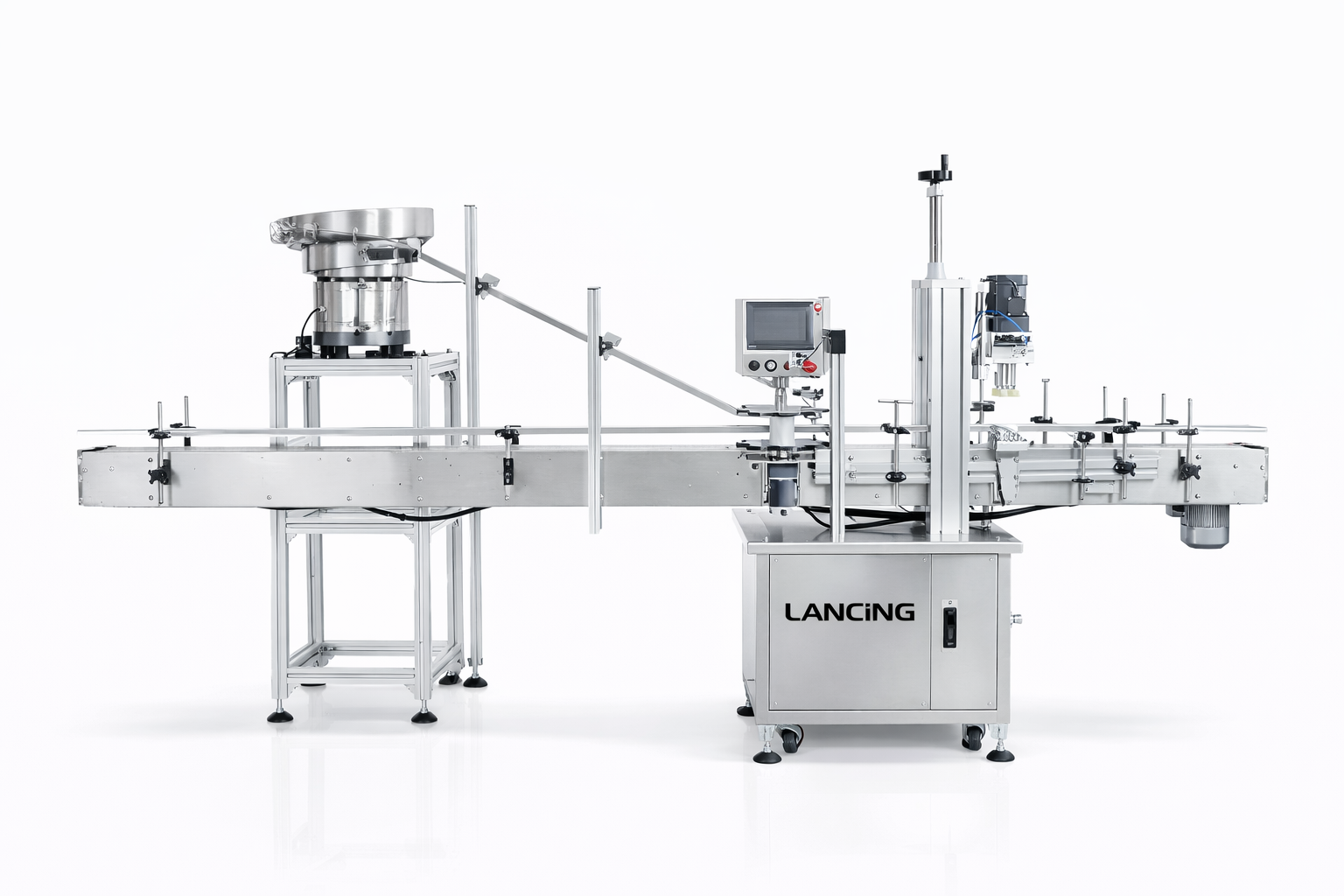
A semi-automatic pump capper can suit shorter batches where an operator presents the pump and controls the bottle before a repeatable tightening cycle. An automatic inline capper adds bottle transport, pump placement and controlled sequence, but it also requires the format to remain stable through every transfer.
Where one machine must run very different container materials, separate guide settings, pucks, starwheels, side-grip arrangements or recipes may be required. The bottle-stabilisation guide explains the mechanical choices, while the mixed-format question page shows how to group formats for qualification.
Buyer questions
These answers identify the decision; representative samples are still required to confirm the machine and settings.
One pump capper may run all three when the bottle range can be stabilised, transported and tightened with practical change parts and settings. The shared pump thread is not enough by itself. Each material and shape still needs a qualified bottle-control method, contact standard and finished-pack acceptance test.
No universal material-based torque can be assumed. The approved result depends on the actual bottle finish, pump collar, seal design, thread engagement and test method. Glass changes the handling and breakage risk, but the torque window must come from the complete pack specification and trials.
Empty bottles can reveal geometry and thread-start issues, but they may not reproduce production stability or wall behaviour. Use the intended filled condition or an agreed safe ballast when weight, centre of mass, side pressure or product residue can affect the result.
It can. Clear, opaque, coloured, printed and reflective packs can present different backgrounds and edges to optical or vision checks. Trial the final decoration and lighting condition, and define what the sensor proves rather than assuming one setup will work across every presentation.
Related guidance
Choose guides, belts, fixtures and timing around the real container behaviour.
Separate thread, seal, contamination, component and distribution causes.
Review the bottle finish, pump collar, actuator and dip tube as one format.
Bottle-format review
Lancing can compare bottle control, pump insertion, tightening contact and finished-pack checks before the machinery route is finalised.