Review samples
Measure the bottle, neck, pump head and tube; record variation and packing method.
Cosmetics and skincare
Pump capping systems for premium skincare, serum, cleanser, foundation and personal-care packaging where presentation matters as much as closure security.
The engineering challenge
Cosmetic bottles may be glass, coated, decorated or unusually shaped. Scuff prevention, controlled clamping and consistent final pump height are therefore central to the machine design.
Select handling around the most fragile bottle and the least tolerant decoration. Sample trials should include production-labelled packs, not only undecorated components.
Recommended process
Start with pack behaviour and acceptance criteria, then select the machine architecture that can sustain the production requirement.
Measure the bottle, neck, pump head and tube; record variation and packing method.
Confirm tube entry, thread start or assembly force with realistic filled-weight bottles.
Choose manual, semi-automatic or bulk-fed presentation based on output and format stability.
Set the tightening or assembly method, bottle support and required change parts.
Document rate, torque, orientation, leaks, damage, rejects and changeover tests.
Suitable configurations
These are starting points. Final selection follows a review of the complete format matrix and production targets.
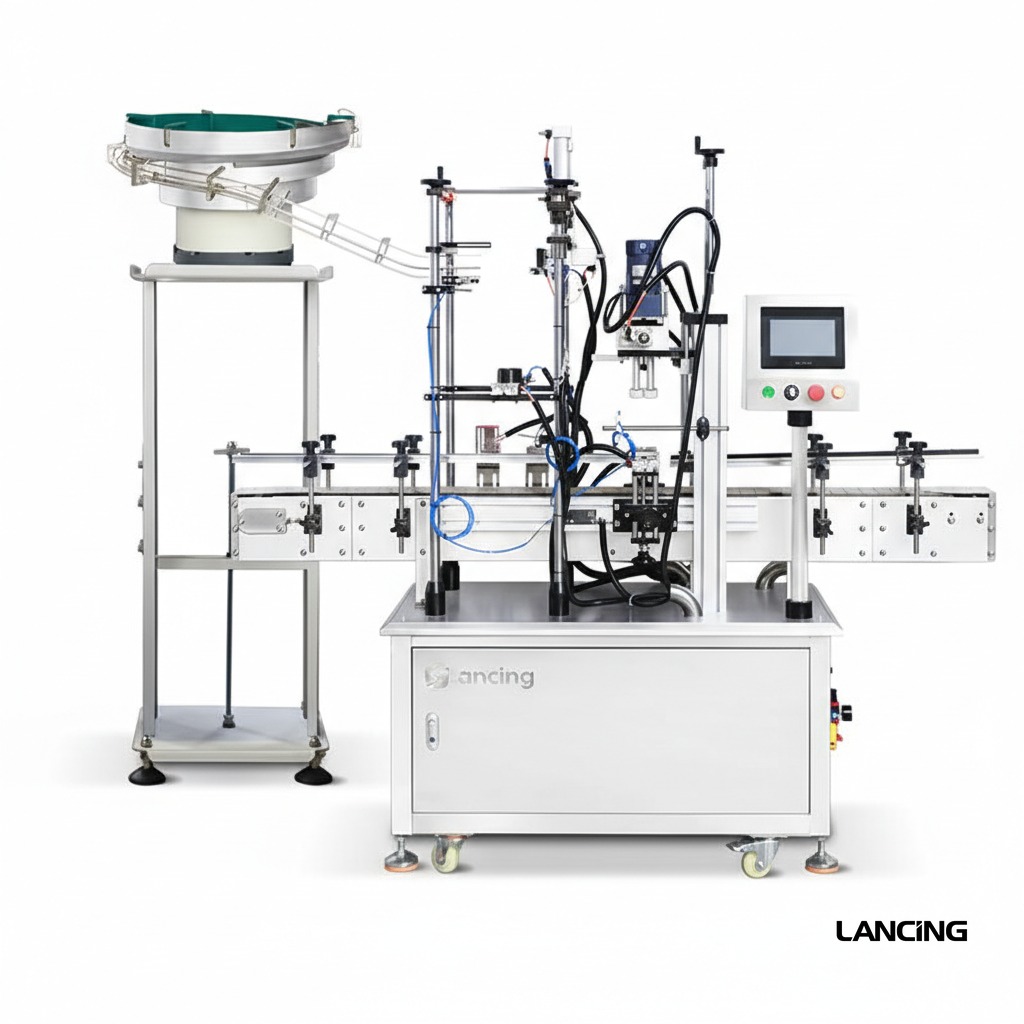
Automatic inline configuration
An automatic in-line system for placing and tightening pump closures, with bottle handling, closure transfer and powered capping in one compact production cell.
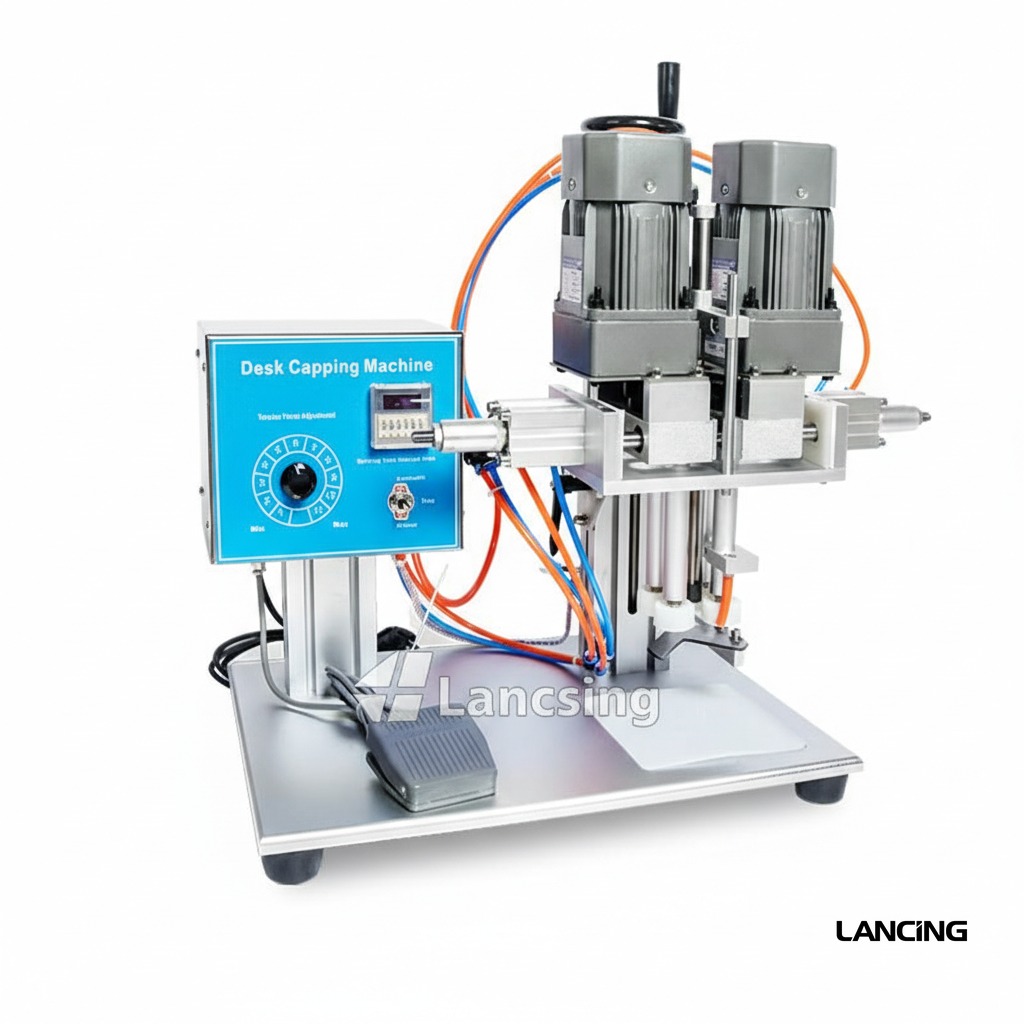
View machine detailsSemi-automatic configuration
A compact pneumatic capping machine for operators who manually place pump closures and need faster, more repeatable tightening than hand capping.
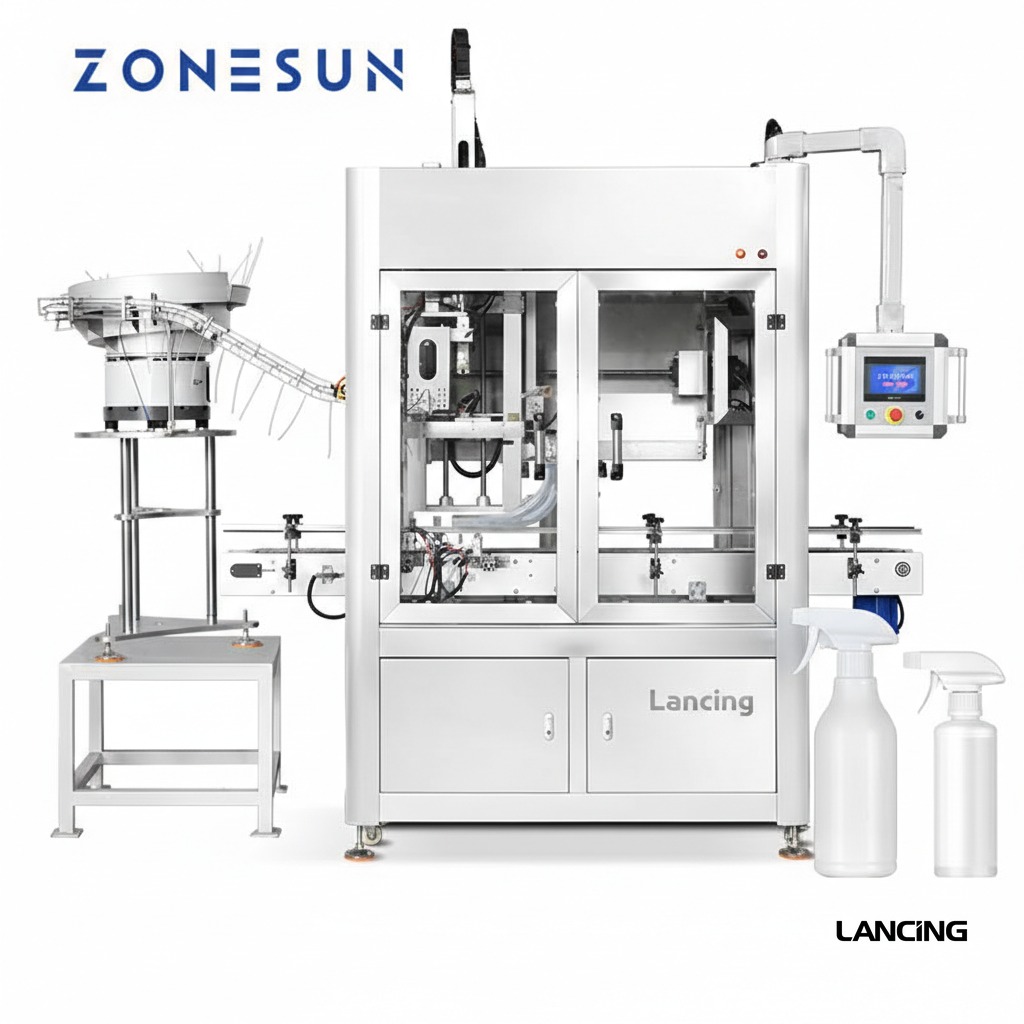
View machine detailsGuarded automatic configuration
A guarded automatic capping platform that can be assessed for pump-compatible applications where enclosure, controlled access and an integrated production-cell format are required.
View machine detailsPractical answers
Every pump format behaves differently. Final machine selection and performance are confirmed through sample review and agreed trials.
The choice depends on sustained output, batch length, pump presentation, bottle stability and the number of formats. Short runs often suit operator-assisted placement; consistent higher-volume work may justify automatic feeding, placement and tightening.
Potentially, but each design must be assessed as a complete format. Change parts or different feeding methods may be required where actuator shape, tube length, collar size or bottle geometry changes materially.
Enough components are needed to represent normal manufacturing and packing variation and to complete the agreed trial. The quantity depends on the feeding concept, target output and acceptance test.
Yes, through suitable contact materials, controlled guide pressure and format-specific support. Trials should use production-labelled, coated or printed bottles where cosmetic quality is important.
Next step
Share the bottle and closure formats, target output, current process and required acceptance criteria for a focused machinery review.
Compatibility evidence
Cosmetic and skincare packs often combine small components, visible finishes and directional dispensers. The machine must protect appearance while producing a secure, repeatable assembly.
Agree which collar, actuator and bottle areas may contact tooling. Include decorated and labelled bottles in trials because a stable plain sample may hide marking or scuffing that appears on the retail pack.
Final closure height can reveal incomplete thread engagement or a trapped component. Directional actuators should be assessed after tightening and discharge. Define the allowed height range and direction window using the same measurement method for FAT and site checks.
Short cosmetic batches can make changeover quality as important as peak speed. Identify all guides, chucks, nests and settings. Clean contact surfaces between product or colour changes and verify the first pack before releasing the line.
A semi-automatic capper can suit frequent small batches where operators place delicate pumps. Automatic feeding becomes more attractive when volume, labour or presentation consistency justifies dedicated handling. Compare both routes with the same format and quality evidence.
Project review
Send decorated bottles, production pumps, presentation limits, batch profile and target output so handling and tightening can be assessed together.
Premium pack presentation
Cosmetic bottles may use coatings, print, labels or decorative surfaces that limit where guides and side belts can contact the pack. Provide saleable decoration and define cosmetic acceptance under the actual inspection lighting. Record whether the dispenser must align with a bottle panel or label.
The orientation guide helps define the datum and finished state, while the bottle-stabilisation guide covers support without scuffing or distortion. Airless or multi-part formats should be assessed on their actual assembly method rather than assumed to behave like a conventional threaded lotion pump.