
Automatic pump-capping process
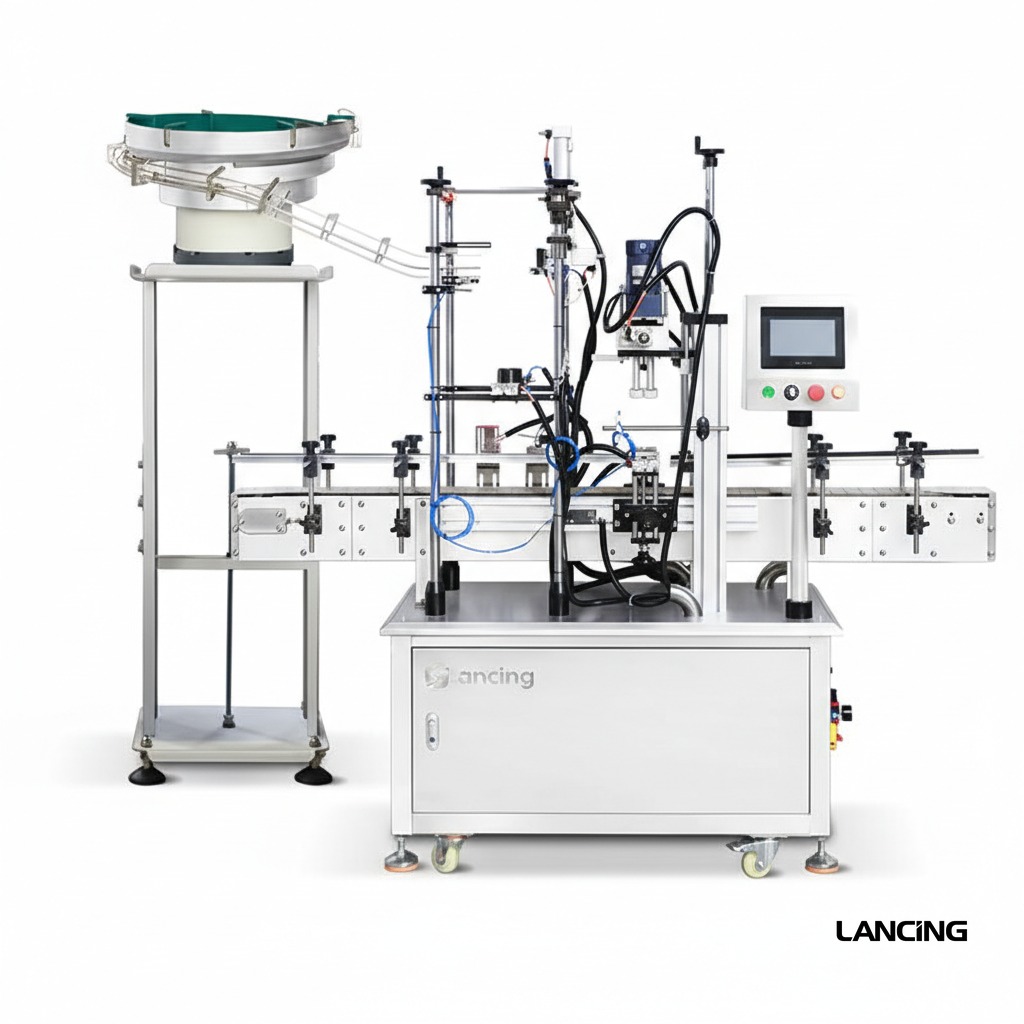
How Does an Automatic Pump Capping Machine Work?
Understand how an automatic pump capping machine feeds, orients, inserts, pre-threads, tightens and checks lotion or spray pump closures.
Pump capping question library
Start with the buyer question you need to resolve, then follow the linked machine and engineering guidance for the detail required to prepare a useful enquiry.
 Answers · evidence · next step
Understand the process and faults
Use these answers to separate feeding, tube insertion, thread start and finished-pack quality before choosing a machine route.
Automatic pump-capping process
Understand how an automatic pump capping machine feeds, orients, inserts, pre-threads, tightens and checks lotion or spray pump closures.
Format flexibility
Learn when one pump capper can run several bottle and pump formats, what change parts may be needed and how to validate mixed-format changeovers.
Fault diagnosis
Find the causes of pump-cap cross-threading and use a stage-by-stage method to separate placement, bottle-control, thread and tightening faults.
Dip-tube handling
Understand why lotion and spray pump dip tubes tangle, cross or miss the neck, and how bulk packing, feeder level and insertion trials reveal the cause.
Plan formats and evidence
Use these answers when defining a mixed-format range, sample quantity, closure families or the evidence needed to accept the pack.
Sample-trial planning
Plan pump capping trial samples by format, component variation, feeder conditions, sustained run length and quality evidence rather than one fixed quantity.
Mixed closure production
Compare shared and dedicated equipment for lotion pumps and trigger sprayers, including feeding, orientation, dip tubes, tooling and changeover.
Finished-pack quality
Build a pump-capping quality plan using removal torque, closure height, seating, orientation, leak and function checks with controlled methods.
How to use the library
Each page states the general engineering answer first, explains the factors that can change it and links to the relevant machine or technical guide. The final machinery decision still depends on representative bottles, pumps, bulk packaging and production conditions.
The question page gives the concise answer. The linked machine and guide pages provide the deeper specification, integration, troubleshooting or acceptance detail without duplicating the same answer across several URLs.
When contacting Lancing, include the format evidence listed on the page. That helps the machinery team answer the specific question against the real bottle-and-pump combination rather than relying on a generic capper description.
Deeper technical guidance
Turn the pack, output, feeding and quality requirement into a practical machine shortlist.
Prepare the samples, interfaces, utilities and acceptance evidence needed for quotation.
Project-specific answer
Lancing can review the handling risk, sample requirement and suitable machine route before a proposal is prepared.
Additional buyer questions
These topics often change the feeder, capping-head, controls, footprint or acceptance method even when the cap thread appears similar.
Fine-mist sprayers are presented in a known orientation, their dip tubes are guided into stable bottles, the collar is started squarely and the closure is tightened using a method proven for the actual pump. Optional overcaps and slender actuators must be protected through feeding and discharge.
They may share a machine only when bottle support, feeder presentation, head clearance, gripping surfaces, thread start, actuator condition and finished-pack checks are all validated for both formats. A larger foaming-pump head or different centre of mass can require separate change parts or a different handling route.
The line needs a defined defect signal, bottle tracking from the inspection point to the reject point, a reject device suited to the pack and confirmation that the failed bottle has left the saleable flow. The detection method must match the defect; one height or presence sensor cannot prove every quality condition.
The project must assign responsibility for every machine boundary, conveyor gap, interlock and emergency-stop interface. The supplier, integrator and user each need clear deliverables, while the final arrangement requires competent application-specific assessment and safe systems for operation, cleaning and maintenance.
Pack-integrity questions
These topics connect the capping operation to the saleable pack and the extra stations or tests that may be needed around it.
Pump-bottle leakage can come from thread start, seating, seal design, bottle or pump damage, product contamination, component variation or storage and transport conditions. Locate the path before changing torque.
It can. Bottle stiffness, weight, footprint and decoration affect support, side pressure, transfers and acceptable contact even when the pump thread is unchanged.
It should stay fitted only when it is secure, can be handled without damage and does not hide a required pump check. Otherwise a separate application station may be more controllable.