Review samples
Measure the bottle, neck, pump head and tube; record variation and packing method.
Robust production packaging
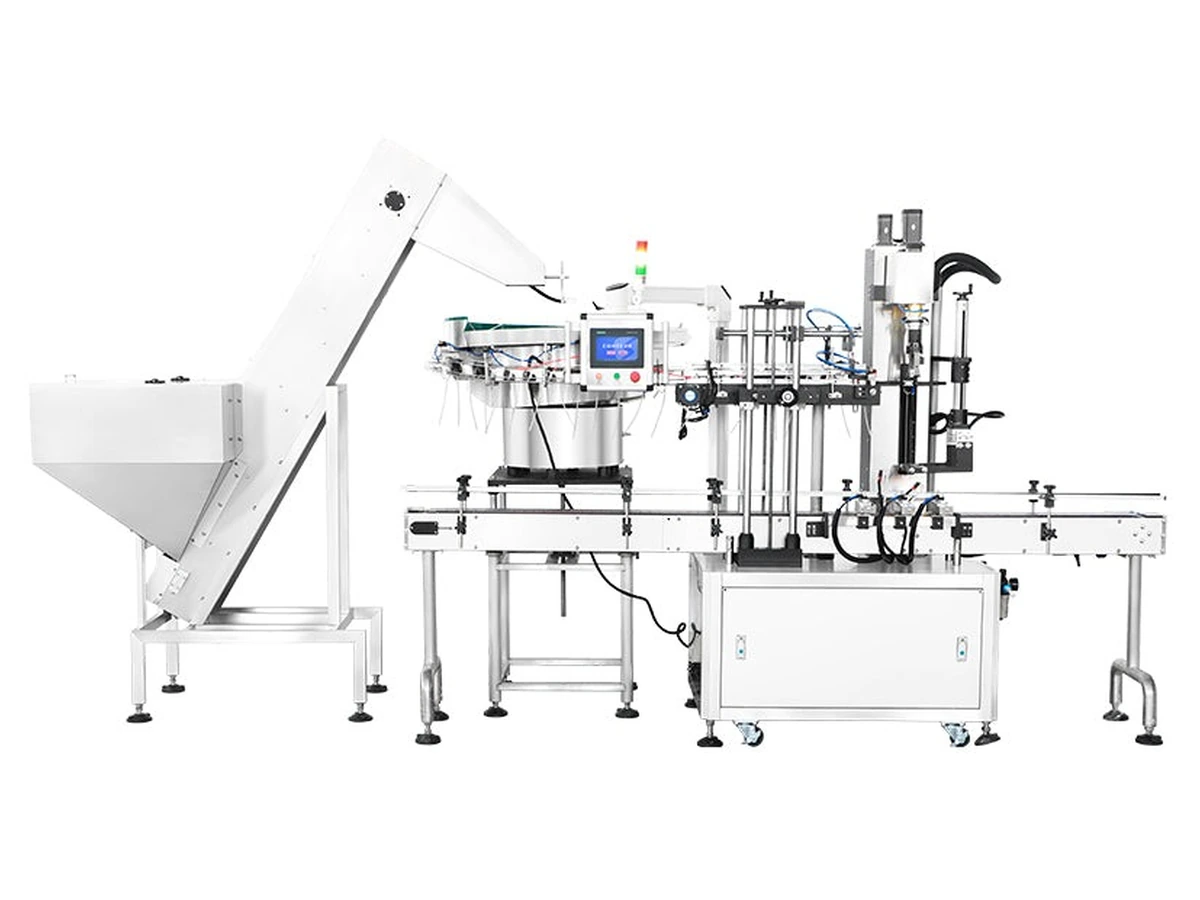
Pump and trigger capping machinery for detergents, cleaners, disinfectants, lubricants and other household or industrial liquids.
The engineering challenge
These formats often combine large or handled bottles with chemically resistant closures. Bottle stability, spill control and material compatibility can dominate the equipment specification.
Supply filled-weight samples or representative ballast during testing. Empty bottles can behave very differently from filled production containers.
Recommended process
Start with pack behaviour and acceptance criteria, then select the machine architecture that can sustain the production requirement.
Measure the bottle, neck, pump head and tube; record variation and packing method.
Confirm tube entry, thread start or assembly force with realistic filled-weight bottles.
Choose manual, semi-automatic or bulk-fed presentation based on output and format stability.
Set the tightening or assembly method, bottle support and required change parts.
Document rate, torque, orientation, leaks, damage, rejects and changeover tests.
Suitable configurations
These are starting points. Final selection follows a review of the complete format matrix and production targets.
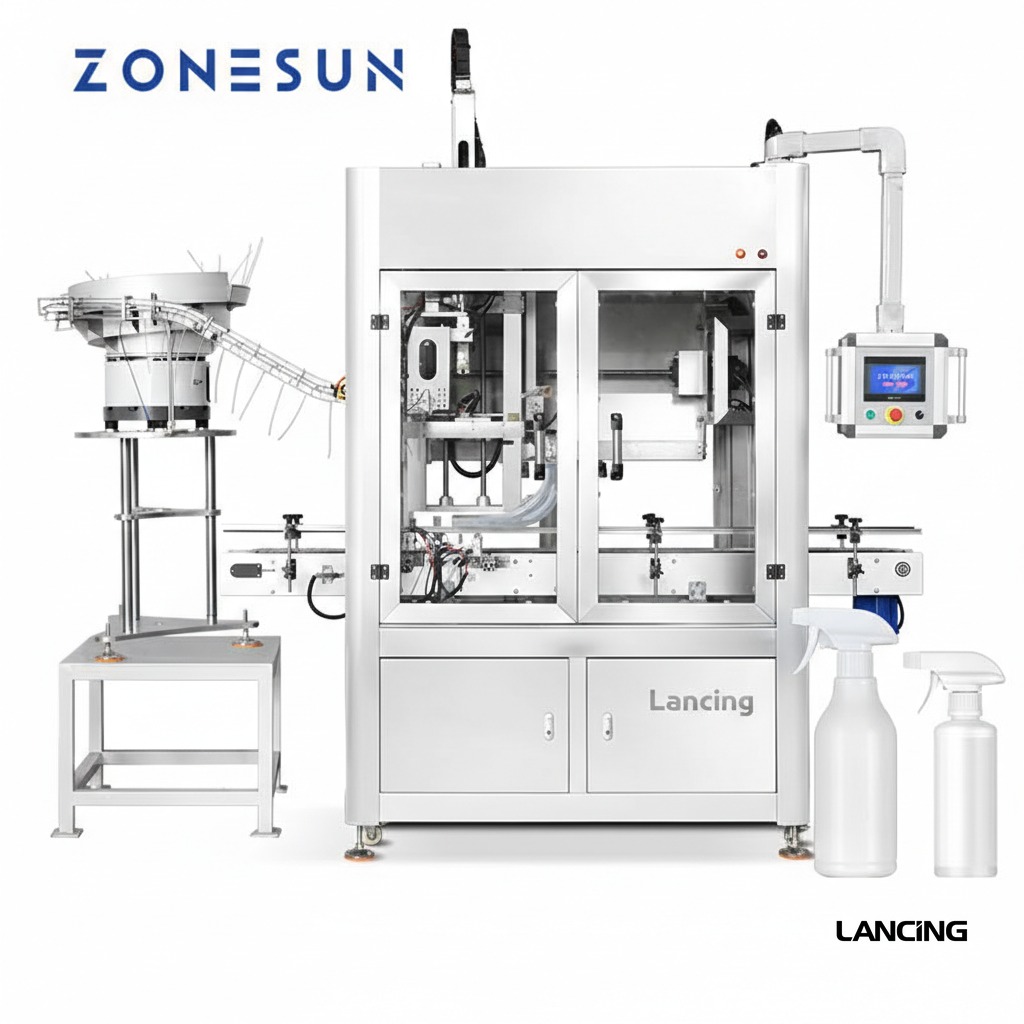
Custom trigger sprayer capper
An automatic capping system engineered for trigger sprayers and dispenser pumps whose head shape, actuator direction and long dip tube require positive orientation and bottle control.
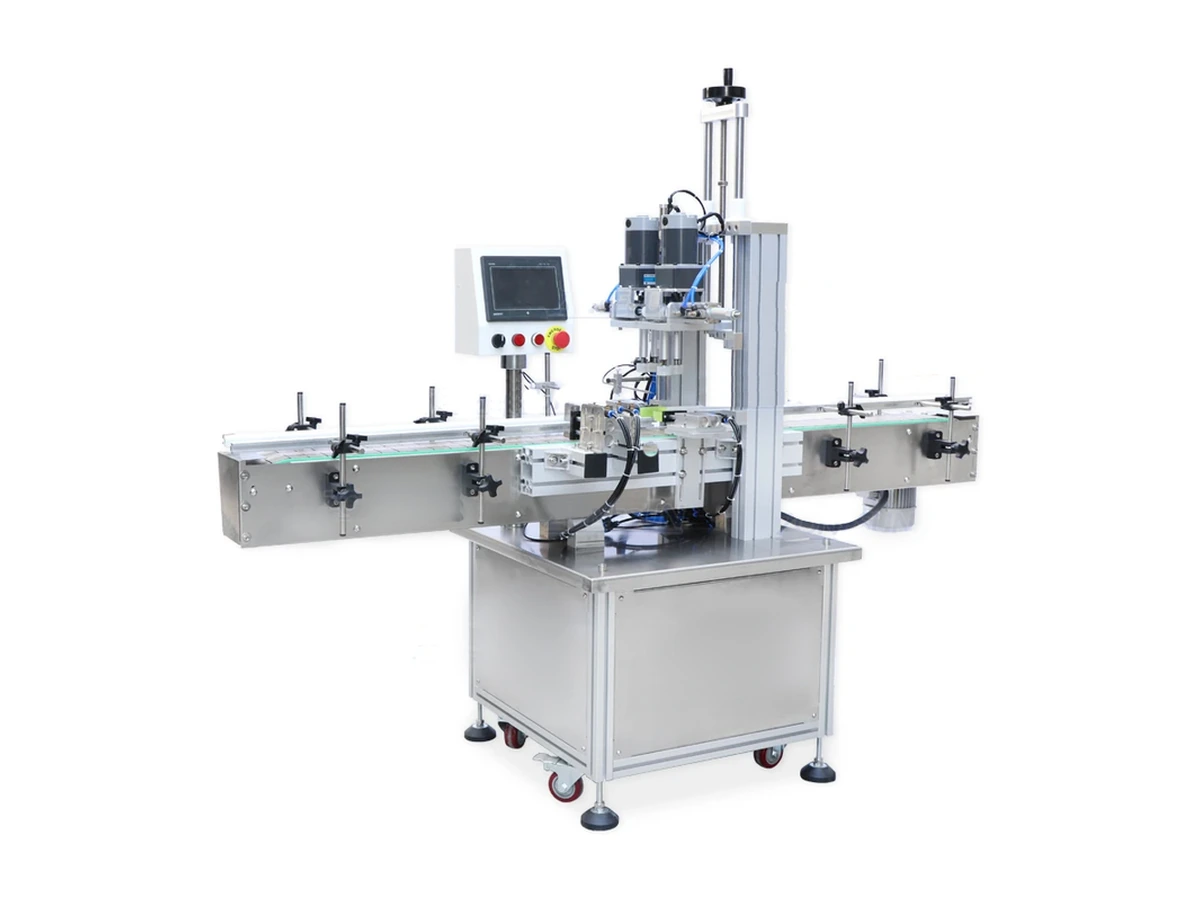
View machine detailsConfigured inline system
A flexible automatic screw-capping platform for suitable spray and pump closures, using in-line bottle control and powered capping modules.
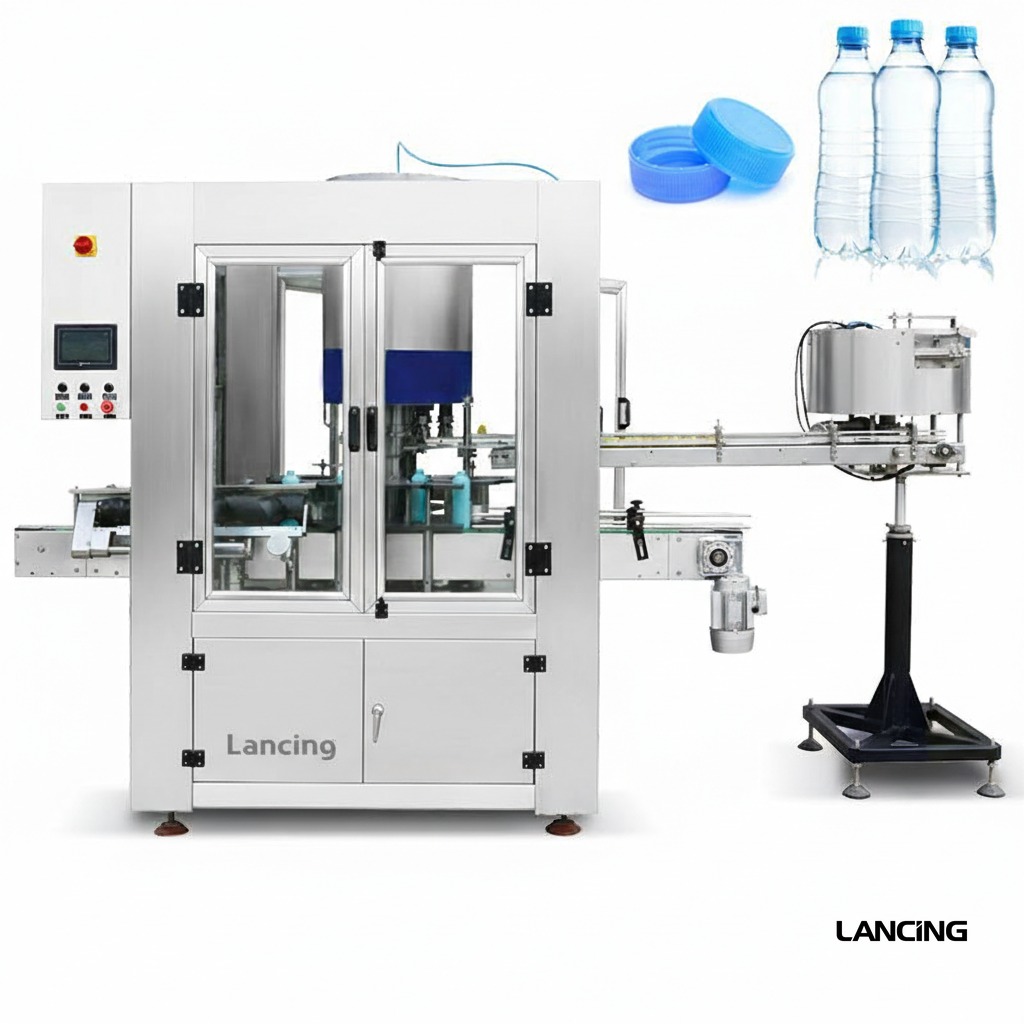
View machine detailsHigh-throughput rotary configuration
A custom rotary platform for high-volume pump bottle production where controlled transfer, repeatable closure placement and continuous output are critical.
View machine detailsPractical answers
Every pump format behaves differently. Final machine selection and performance are confirmed through sample review and agreed trials.
The choice depends on sustained output, batch length, pump presentation, bottle stability and the number of formats. Short runs often suit operator-assisted placement; consistent higher-volume work may justify automatic feeding, placement and tightening.
Potentially, but each design must be assessed as a complete format. Change parts or different feeding methods may be required where actuator shape, tube length, collar size or bottle geometry changes materially.
Enough components are needed to represent normal manufacturing and packing variation and to complete the agreed trial. The quantity depends on the feeding concept, target output and acceptance test.
Yes, through suitable contact materials, controlled guide pressure and format-specific support. Trials should use production-labelled, coated or printed bottles where cosmetic quality is important.
Next step
Share the bottle and closure formats, target output, current process and required acceptance criteria for a focused machinery review.
Compatibility evidence
Household and chemical packs can combine unstable HDPE bottles, large pump or trigger heads, residual product and frequent format changes. The trial should reproduce those practical conditions.
Filled weight improves some bottles but flexible sidewalls can still distort under side belts or guides. Use representative fill or safe ballast, identify acceptable contact areas and test the least stable format through start, stop and discharge conditions.
State product residue, wash-down or wipe-down expectations, ambient conditions and any site material restrictions. This information supports suitable contact surfaces, sensor placement, cleaning access and service selection without making unsupported chemical-compatibility assumptions.
A shared line may handle pumps and trigger sprayers, but their orientation and tube behaviour can differ. Keep this page pump-led; for a trigger-only configuration, use Trigger Cappers UK so specialist trigger intent is not duplicated.
Test caught tubes, missing closures, unstable bottles and downstream blockage. The operator should be able to isolate the affected point, remove damaged components and restart without applying the next pump to the wrong bottle.
Project review
Share the full closure range, filled pack behaviour, site environment, target output and line interfaces for a focused machinery review.
Production condition
Flexible containers, handles, product residue and directional closures can alter the way a bottle is supported and capped. The machine review should reflect normal filling, cleaning and downstream handling rather than empty display samples alone.
| Application factor | Information to provide | Why it affects the project |
|---|---|---|
| Bottle stiffness and filled weight | Material, wall behaviour, handle or grip features and safe representative filled condition. | Determines guide pressure, side support and resistance to rotation or collapse during tightening. |
| Neck condition after filling | Whether product, foam or cleaning liquid can remain on the neck, thread or bottle shoulder. | Residue can change friction, obscure sensors and affect the repeatability of thread engagement. |
| Product and cleaning information | Safety data, cleaning method and any site restrictions relevant to machinery contact materials. | Allows the final machine materials and cleaning approach to be reviewed without making unsupported compatibility assumptions. |
| Pump or trigger direction | Required nozzle position, locked state and permitted tolerance relative to the bottle or label. | May require orientation before, during or after tightening and affects the acceptance method. |
| Leak and closure-security check | Approved torque or removal-torque method, handling test and product-specific leak assessment. | Defines what constitutes an acceptable finished pack and the reaction to a failed result. |
| Decoration and label protection | Production labels, sleeves, print and areas that may be contacted by guides or belts. | Prevents bottle-control improvements from introducing unacceptable scuffing or label damage. |
| Downstream handling | Inspection, coding, labelling, accumulation, case packing and any required pump direction. | Ensures the capper releases a pack that the next machine can accept consistently. |
A shared line can be considered when lotion pumps, dispenser pumps and trigger sprayers use compatible bottles, handling methods and output expectations. The review should still treat each closure as a separate format with its own feeder, orientation, tube-entry and quality evidence. Common cap diameter does not prove that the same placement tooling or capping sequence will work.
When the production range is entirely trigger sprayers and the main issues are trigger-head orientation, long tubes and directional spray-bottle presentation, use Trigger Cappers UK for the narrower specialist route. This application page remains appropriate where household producers need to compare pumps and triggers within one investment or line concept.
Include representative clean and safely simulated worst-case neck conditions where permitted by the agreed trial plan. Introduce a controlled missed pump, unstable bottle and blocked discharge to confirm alarms and restart. The pump capping troubleshooting guide can be used to separate bottle, placement, thread and tightening causes.
For automatically supplied closures, compare the normal bulk packing with the pump feeding and placement route. Define how the feeder reacts when the capper stops, how components are contained and how operators clear a fault without returning damaged or contaminated pumps to production.
Application review
Send the pack formats, product information, target output and line interfaces so bottle support, closure handling and acceptance checks can be defined.
Production condition
Record the expected filled weight, bottle flexibility and any residue that can remain on the neck or collar after filling. Identify product and cleaning information needed for a competent materials, hygiene and site-risk assessment. A safe substitute may be used for early mechanical trials, but final process suitability depends on the actual application.
Use the line-integration guide where the capper connects to filling, coding, labelling or inspection, and the maintenance guide to define cleaning access and recovery. For highly directional trigger formats, assess the exact pump and required finished direction.
Chemical-pack evidence
Household and industrial packs often combine flexible bottles, directional pumps or triggers and products that can remain around the neck after filling. Those conditions should be present in the machinery and quality review.
An HDPE bottle may flex or panel under guide and side-belt pressure. Excessive restraint can move the neck out of alignment, alter sensor readings or mark the container. Trial the production moulding at representative filled weight and spread contact pressure across approved surfaces.
Compare the full material range in the PET, HDPE and glass pump-bottle guide.
Possible causes include poor thread start, incomplete seal loading, a damaged finish or gasket, product on the sealing surfaces, pump-mechanism leakage and conditions encountered during storage or transport. Increasing torque without locating the path can damage the pack and leave the real cause unchanged.
Use the pump-bottle leak diagnosis process and ensure any test method is safe for the actual product.