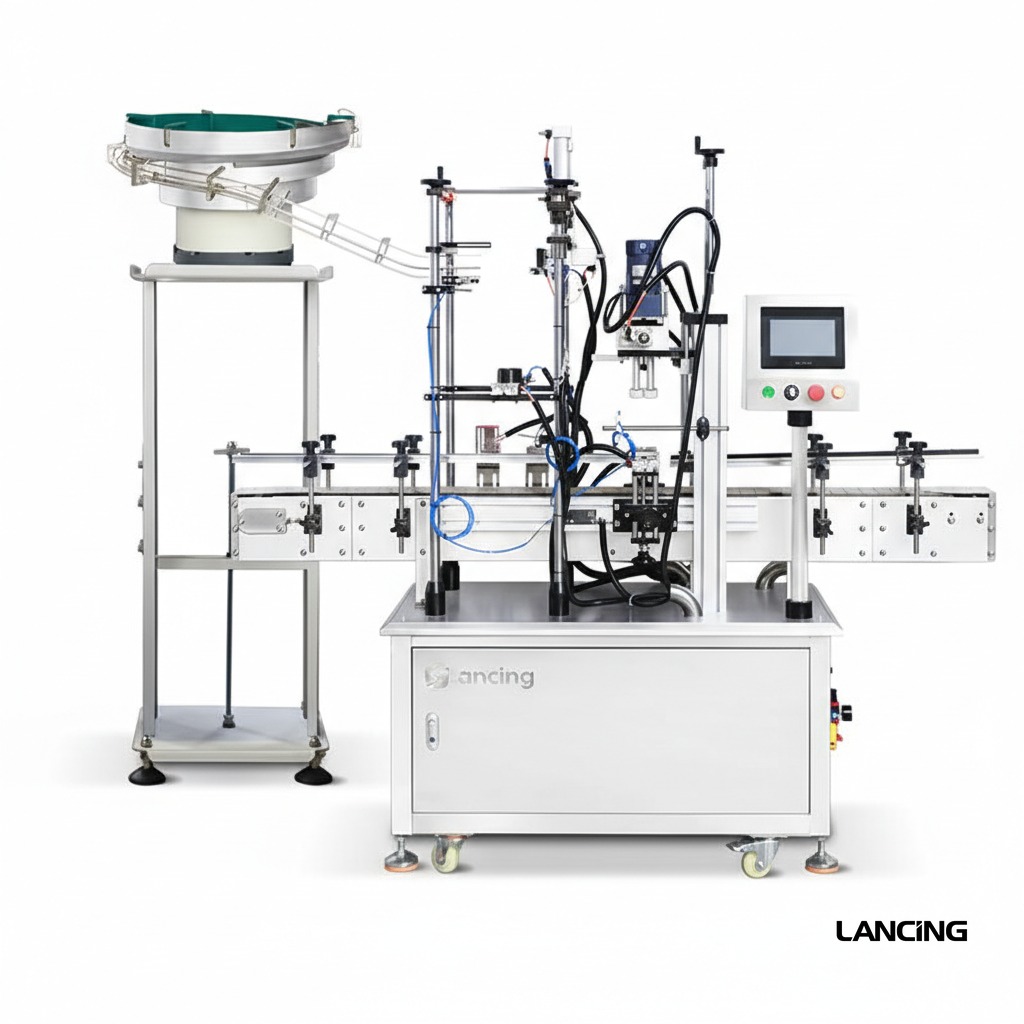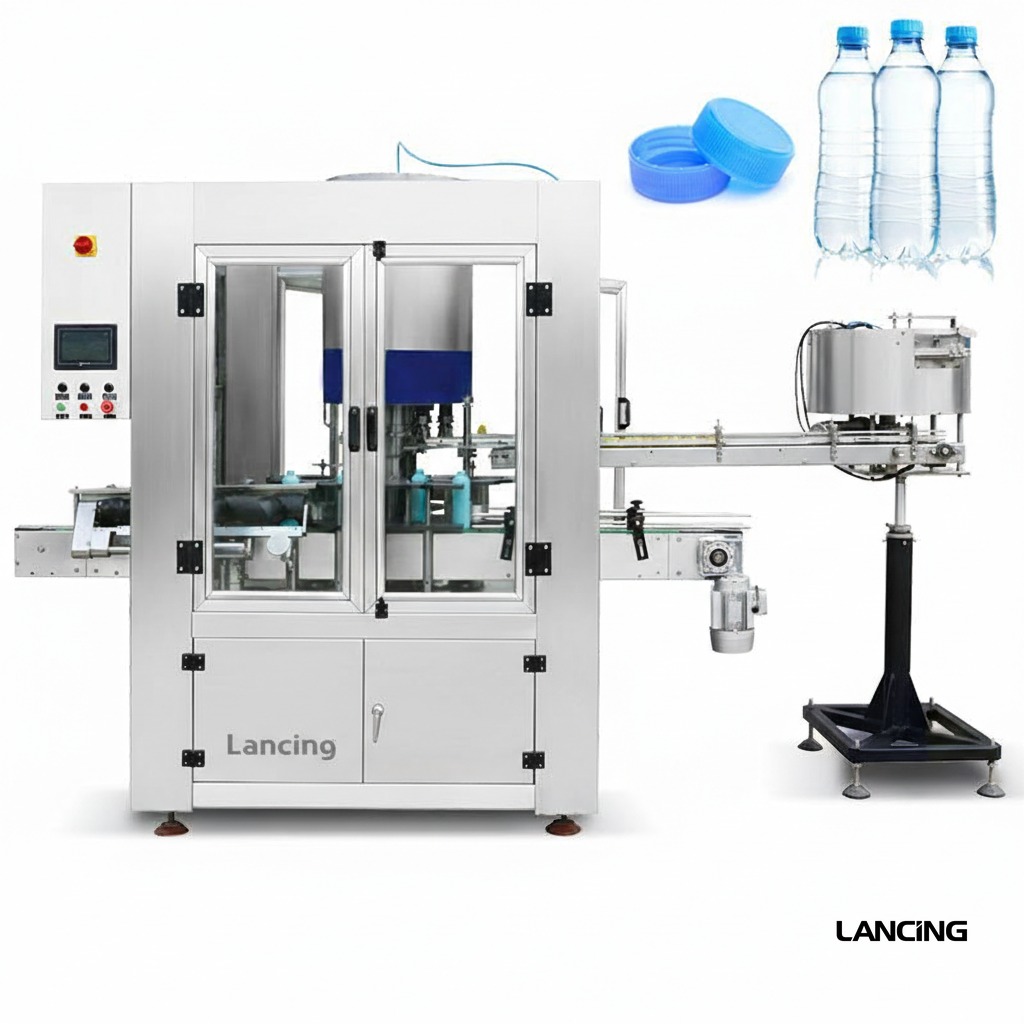
Bottle infeed
Containers are guided and controlled before closure placement.
Asymmetric pump closures
An automatic capping system engineered for trigger sprayers and dispenser pumps whose head shape, actuator direction and long dip tube require positive orientation and bottle control.
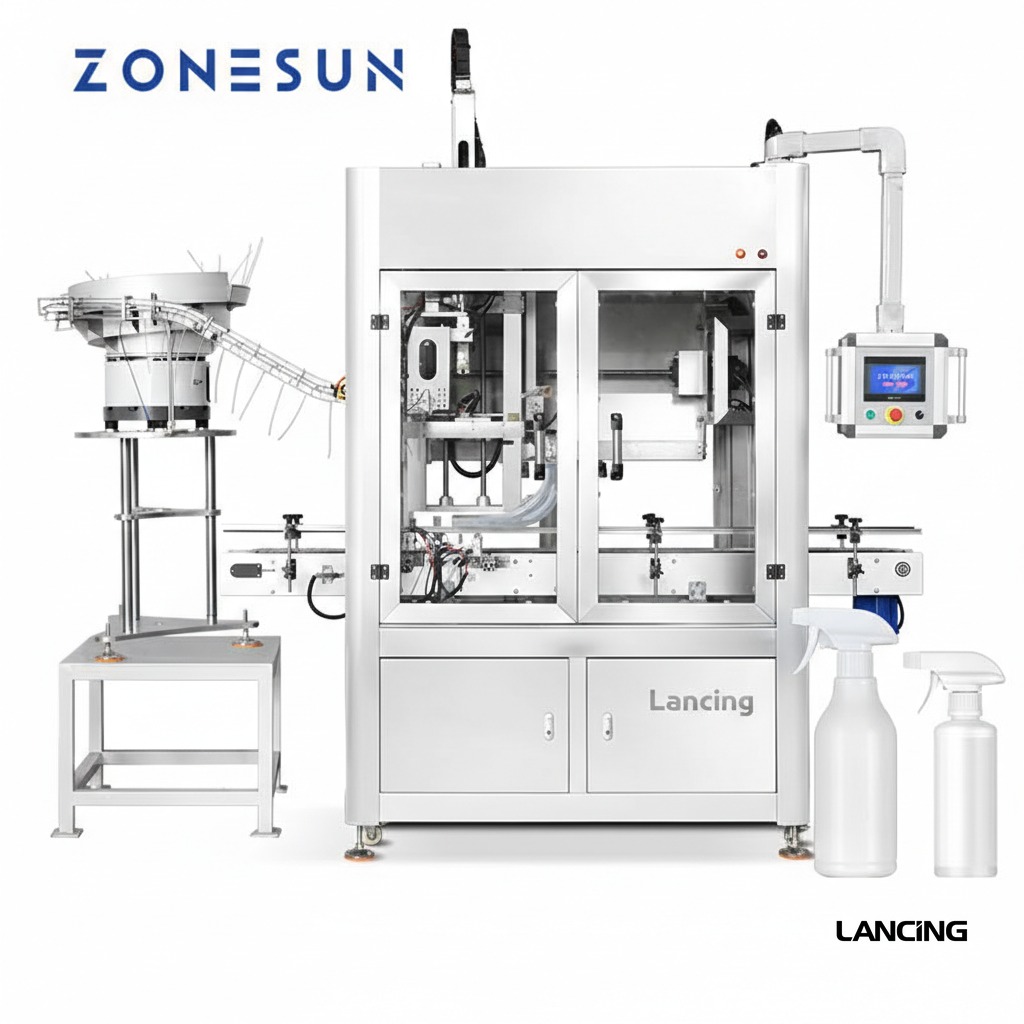
Where it fits
An automatic capping system engineered for trigger sprayers and dispenser pumps whose head shape, actuator direction and long dip tube require positive orientation and bottle control.
Pump capping performance is governed by the complete pack. Bottle support, dip-tube insertion, pump-head orientation and thread engagement are developed together, using approved samples and a documented production requirement.
Project specification
The final specification is developed from approved bottle and pump samples, required output, line interfaces, site standards and documented acceptance criteria.
All performance and dimensions are indicative. Exact configuration and output are subject to approved samples, product information, agreed trials and final quotation.
| Configuration | Automatic trigger and dispenser-pump capping cell |
|---|---|
| Output basis | Configured to sample behaviour and required line rate; confirmed by trial |
| Closure compatibility | Custom-engineered to approved trigger or pump samples |
| Bottle compatibility | Custom-engineered to approved bottle samples |
| Electrical requirements | Confirmed for the final machine and site standard |
| Pneumatic requirements | Confirmed after placement and tooling design |
| Footprint | Confirmed on the approved layout document |
Operating sequence
The final sequence is tailored to the selected closure feeder, bottle format and upstream/downstream interfaces.
Containers are guided and controlled before closure placement.
Closures are oriented so the actuator and tube enter predictably.
The tube is guided into the bottle without snagging or folding.
The closure is located and tightened to the validated setting.
The completed pack is checked for direction, height and security.
Sample-led engineering
Reliable pump automation is proven with representative components rather than inferred from nominal dimensions.
Every size and shape, ideally decorated and at representative filled weight.
Production closures showing normal tube length, curvature, packing and batch variation.
Required sustained rate, shift pattern, batch size and expected line efficiency.
Torque, height, direction, leakage, cosmetic and reject acceptance criteria.
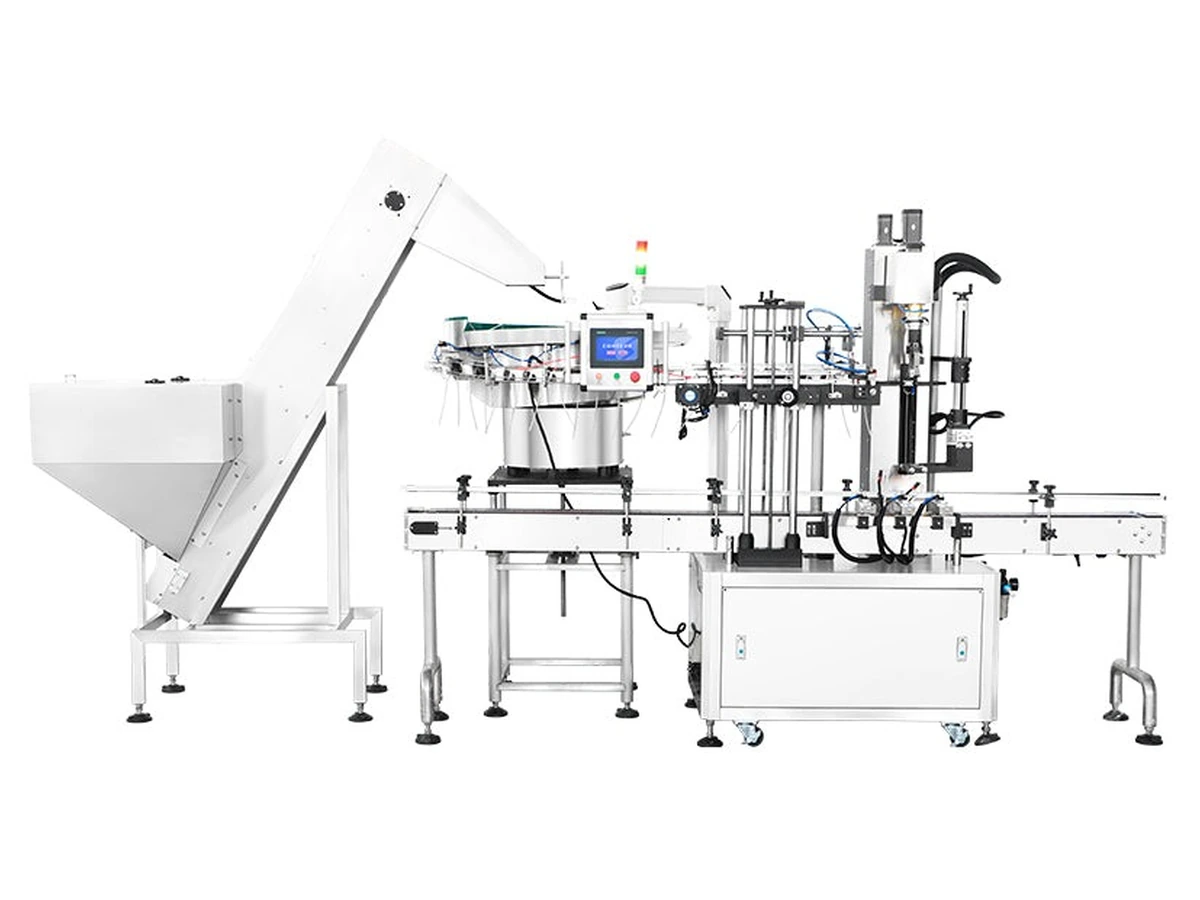
Machine views
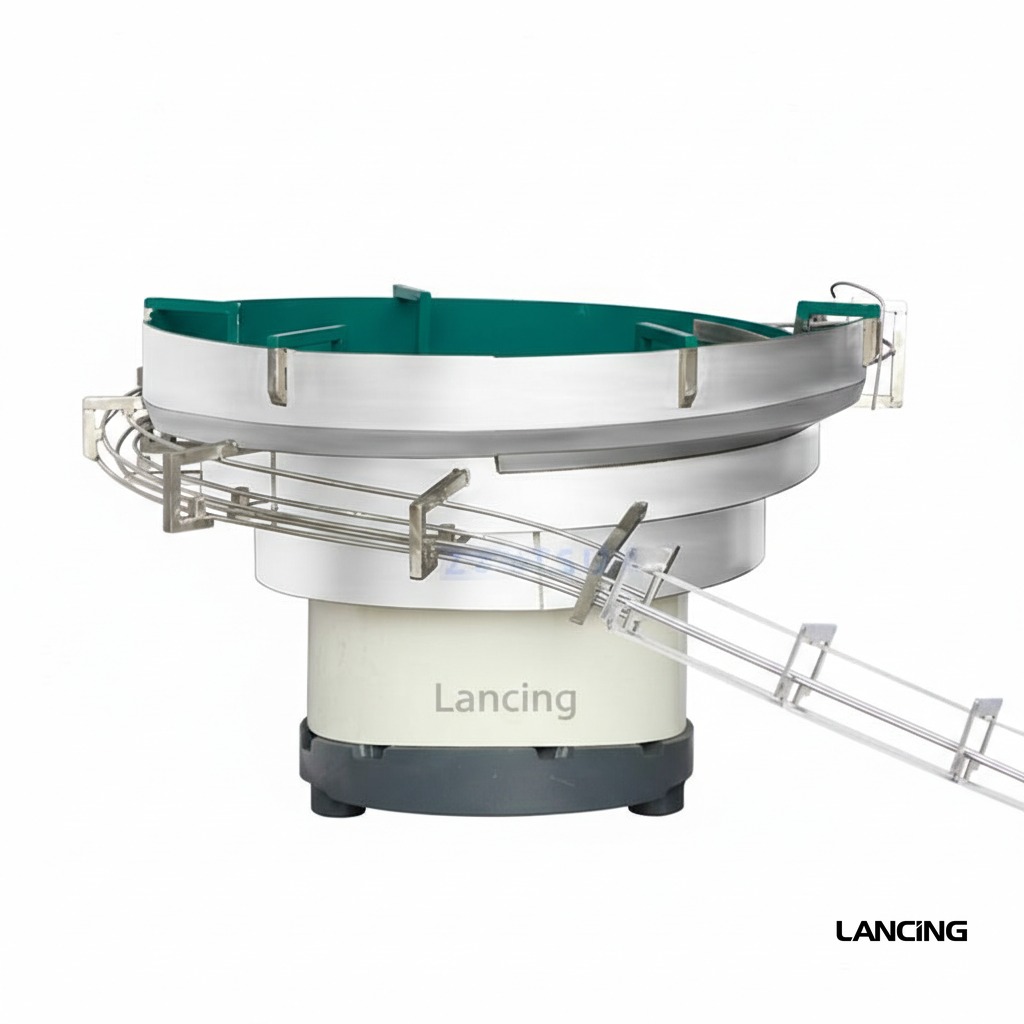
These real product photographs show representative equipment and process details. Your final configuration is confirmed against approved bottles, pumps and project requirements.
Practical answers
Every pump format behaves differently. Final machine selection and performance are confirmed through sample review and agreed trials.
Suitability depends on the complete bottle-and-pump combination, not only nominal diameter. Closure head shape, tube length and curvature, neck finish, filled weight and final presentation are reviewed before a configuration is confirmed.
Output is configured to sample behaviour and the required line rate, then confirmed by trial. Actual sustained output depends on the approved pack, feeding method, changeover, operator or line interfaces and agreed acceptance conditions. The project quotation states the tested or warranted basis.
Usually, provided each format falls within the engineered handling range. Some changes may be tool-free; others require guides, chucks, pockets, pump transfer parts or recipe changes. Supply the complete format matrix at enquiry stage.
The method depends on the closure. Directional actuators may be oriented in the feeder, during placement, by controlled thread engagement or in a separate orientation step. Exact directional tolerance must be agreed during testing.
Send representative bottles and pumps from normal production supply, including labelled or decorated bottles where marking is a concern. Filled-weight samples or safe ballast, component technical files and expected variation are also valuable.
Related machinery
Guarded automatic configuration
A guarded automatic capping platform that can be assessed for pump-compatible applications where enclosure, controlled access and an integrated production-cell format are required.
View machine detailsAutomatic inline configuration
An automatic in-line system for placing and tightening pump closures, with bottle handling, closure transfer and powered capping in one compact production cell.
View machine detailsHigh-throughput rotary configuration
A custom rotary platform for high-volume pump bottle production where controlled transfer, repeatable closure placement and continuous output are critical.
View machine detailsNext step
Send sample photographs, dimensions, planned formats and target output. Physical samples are used to confirm handling and the final machine specification.
Verified reference configuration
Trigger sprayers and directional dispenser pumps combine long tubes with a head that often needs a defined final direction. The published reference should be read with those pack-specific risks in mind.
The published Lancing data gives a starting capacity, utilities, capping method and footprint. Final output depends on the approved bottle, pump, bulk presentation, tube behaviour and directional tolerance. See the Lancing LU-XG445A reference page for the first-party specification.
This page supports comparison where pump and trigger closures form part of a wider pump-capping project. A trigger-only search intent, specialist trigger feeder or industry-specific trigger application belongs on Trigger Cappers UK, avoiding duplicate pages across the Lancing network.
State whether the actuator must finish within a directional window relative to the bottle label, handle or panel. Direction may be established during feeding, placement, controlled thread engagement or a separate orientation step. The trial should measure the final result after tightening and line transfer, not only the orientation presented to the capping head.
| Published Lancing reference | LU-XG445A reference value |
|---|---|
| Machine model | LU-XG445A |
| Capacity | 5–23 bottles/min, based on bottle and cap size |
| Voltage | 110 V / 220 V |
| Power | 900 W |
| Air pressure | 0.6–0.8 MPa |
| Cap feeding way | Pneumatic fetch |
| Capping way | Servo-drive screw capping |
| Machine size | About 4520 × 1480 × 2400 mm |
Agree the final actuator direction, tube-insertion result, tightening quality and sustained output for every approved format.
Compatibility trial
A trigger or dispenser pump can appear correct at placement but fail after thread engagement, tightening or discharge. The trial should follow the complete pack through the whole sequence.
Measure tube length, outside diameter, stiffness and any retained curvature. Compare these with neck bore, shoulder geometry and fill level. A tube can catch on a narrow neck, fold against the shoulder or deflect the pump collar before the thread starts. Use pumps from normal supply and include the longest, softest or most curved examples likely to reach production.
Flexible HDPE bottles, tall containers and off-centre necks may need side belts, neck guides, nests or controlled pitch. Supports should resist capping loads without distorting decorated panels or moving the bottle away from the intended direction reference.
Test a missing bottle, missing pump, caught tube and blocked transfer. The machine should identify the fault and restart without placing a pump onto the wrong bottle. For changeover, record feeder rails, guides, pick positions, bottle supports, head settings, sensors and the method used to re-establish final actuator direction.
Inspect contact points for residue, label adhesive and worn grip surfaces. Trigger heads can have delicate nozzles and visible decorative parts, so the approved handling points should be marked. Cleaning should restore friction and sensor visibility without changing the reference position of format tooling.
Project review
Send bottles, pumps, tube dimensions, final direction requirements and target output so the trigger/dispenser route can be tested on the right basis.
Directional closure control
A wide trigger or offset actuator changes the pack centre of mass and can collide with guides after placement. Define the bottle datum, required finished direction, tube-entry path and permitted contact surfaces before the orientation and tightening sequence is selected.
Use the actuator-orientation guide to set measurable acceptance criteria and the bottle-stabilisation guide to review side belts, neck support, guide clearance and discharge. Where trigger-only specialist information is needed, the related Lancing trigger-capping resource can be used alongside this pump-capping project review.