Infeed
Bottles are accumulated and transferred into the rotary handling system.
High-output pump capping
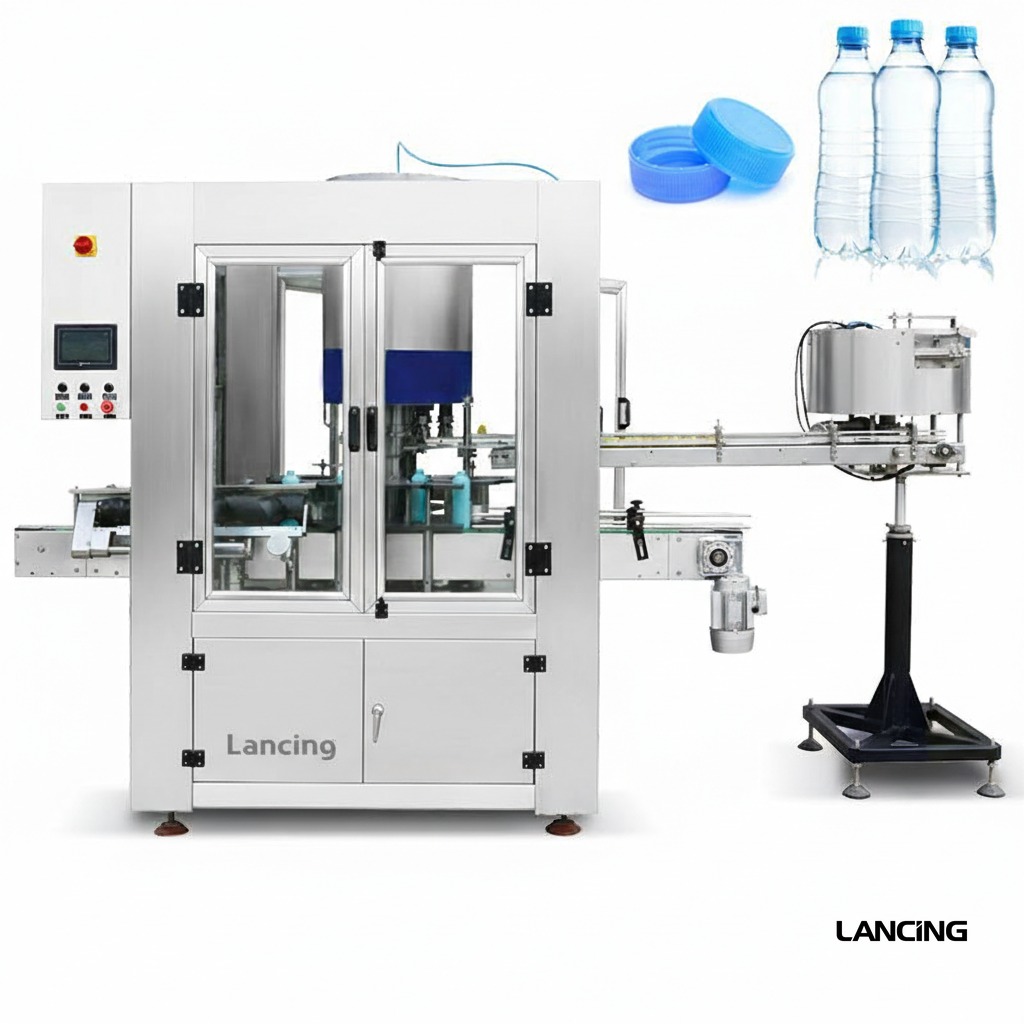
A custom rotary platform for high-volume pump bottle production where controlled transfer, repeatable closure placement and continuous output are critical.
Where it fits
A custom rotary platform for high-volume pump bottle production where controlled transfer, repeatable closure placement and continuous output are critical.
Pump capping performance is governed by the complete pack. Bottle support, dip-tube insertion, pump-head orientation and thread engagement are developed together, using approved samples and a documented production requirement.
Project specification
The final specification is developed from approved bottle and pump samples, required output, line interfaces, site standards and documented acceptance criteria.
All performance and dimensions are indicative. Exact configuration and output are subject to approved samples, product information, agreed trials and final quotation.
| Configuration | High-throughput rotary pump capping platform |
|---|---|
| Output basis | Configured for sustained high-throughput production and confirmed by trial |
| Closure compatibility | Custom-engineered to approved pump samples |
| Bottle compatibility | Custom-engineered to approved bottle samples |
| Electrical requirements | Confirmed for the final machine and site standard |
| Pneumatic requirements | Confirmed after tooling and handling design |
| Footprint | Confirmed on the approved layout document |
Operating sequence
The final sequence is tailored to the selected closure feeder, bottle format and upstream/downstream interfaces.
Bottles are accumulated and transferred into the rotary handling system.
Each container is positively located through the pump application stations.
Closures are presented and placed using format-specific tooling.
The pump is tightened under repeatable mechanical control.
Finished containers are released to downstream inspection and packing.
Sample-led engineering
Reliable pump automation is proven with representative components rather than inferred from nominal dimensions.
Every size and shape, ideally decorated and at representative filled weight.
Production closures showing normal tube length, curvature, packing and batch variation.
Required sustained rate, shift pattern, batch size and expected line efficiency.
Torque, height, direction, leakage, cosmetic and reject acceptance criteria.
Machine views
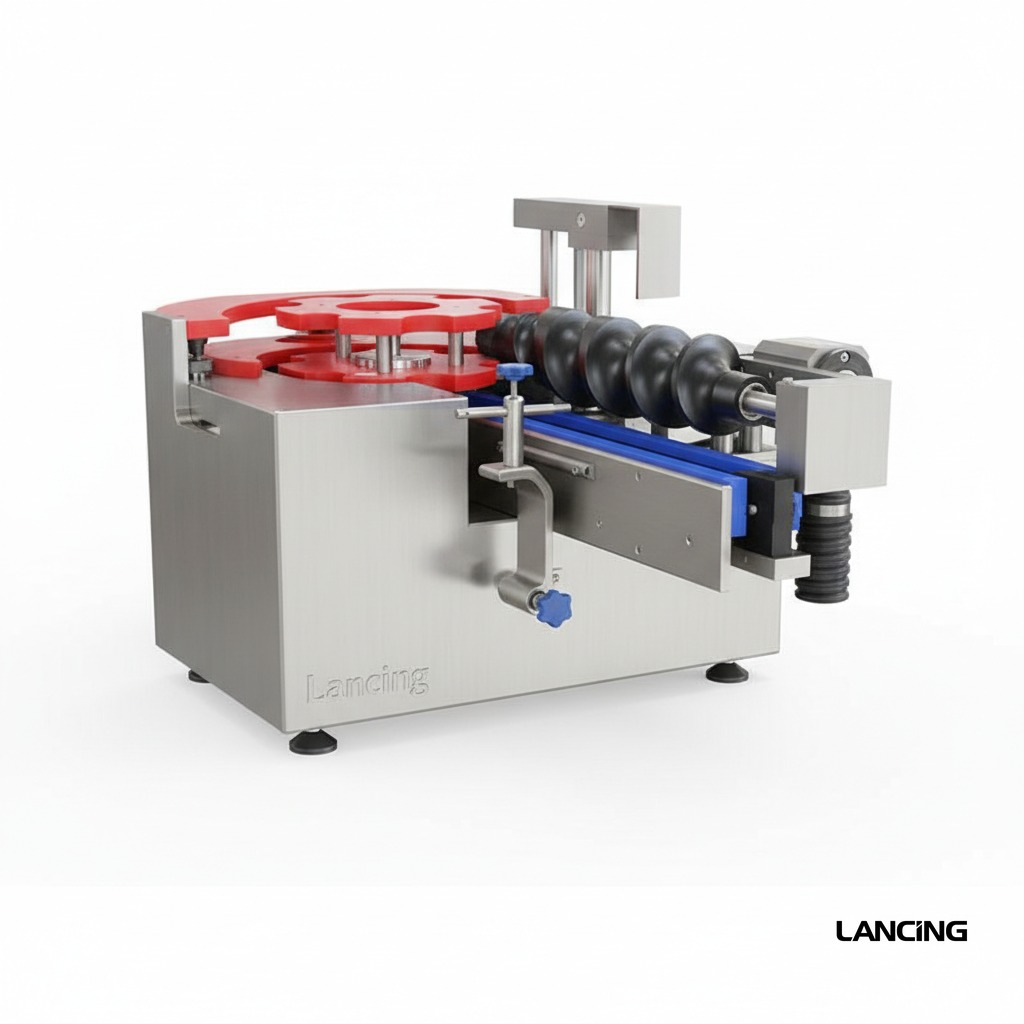
These real product photographs show representative equipment and process details. Your final configuration is confirmed against approved bottles, pumps and project requirements.
Practical answers
Every pump format behaves differently. Final machine selection and performance are confirmed through sample review and agreed trials.
Suitability depends on the complete bottle-and-pump combination, not only nominal diameter. Closure head shape, tube length and curvature, neck finish, filled weight and final presentation are reviewed before a configuration is confirmed.
Output is configured for sustained high-throughput production and confirmed by trial. Actual sustained output depends on the approved pack, feeding method, changeover, operator or line interfaces and agreed acceptance conditions. The project quotation states the tested or warranted basis.
Usually, provided each format falls within the engineered handling range. Some changes may be tool-free; others require guides, chucks, pockets, pump transfer parts or recipe changes. Supply the complete format matrix at enquiry stage.
The method depends on the closure. Directional actuators may be oriented in the feeder, during placement, by controlled thread engagement or in a separate orientation step. Exact directional tolerance must be agreed during testing.
Send representative bottles and pumps from normal production supply, including labelled or decorated bottles where marking is a concern. Filled-weight samples or safe ballast, component technical files and expected variation are also valuable.
Related machinery
Semi-automatic configuration
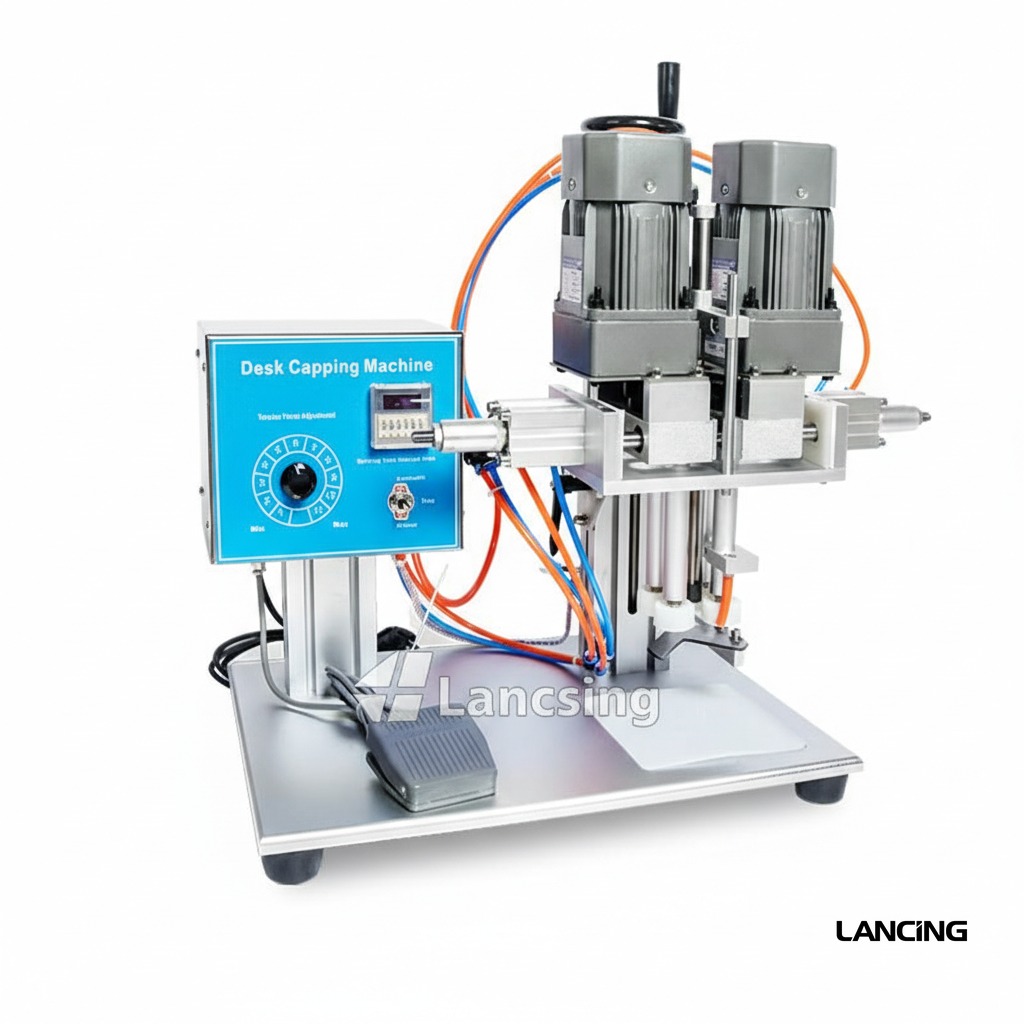
A compact pneumatic capping machine for operators who manually place pump closures and need faster, more repeatable tightening than hand capping.
View machine detailsPump-cap feeding configuration
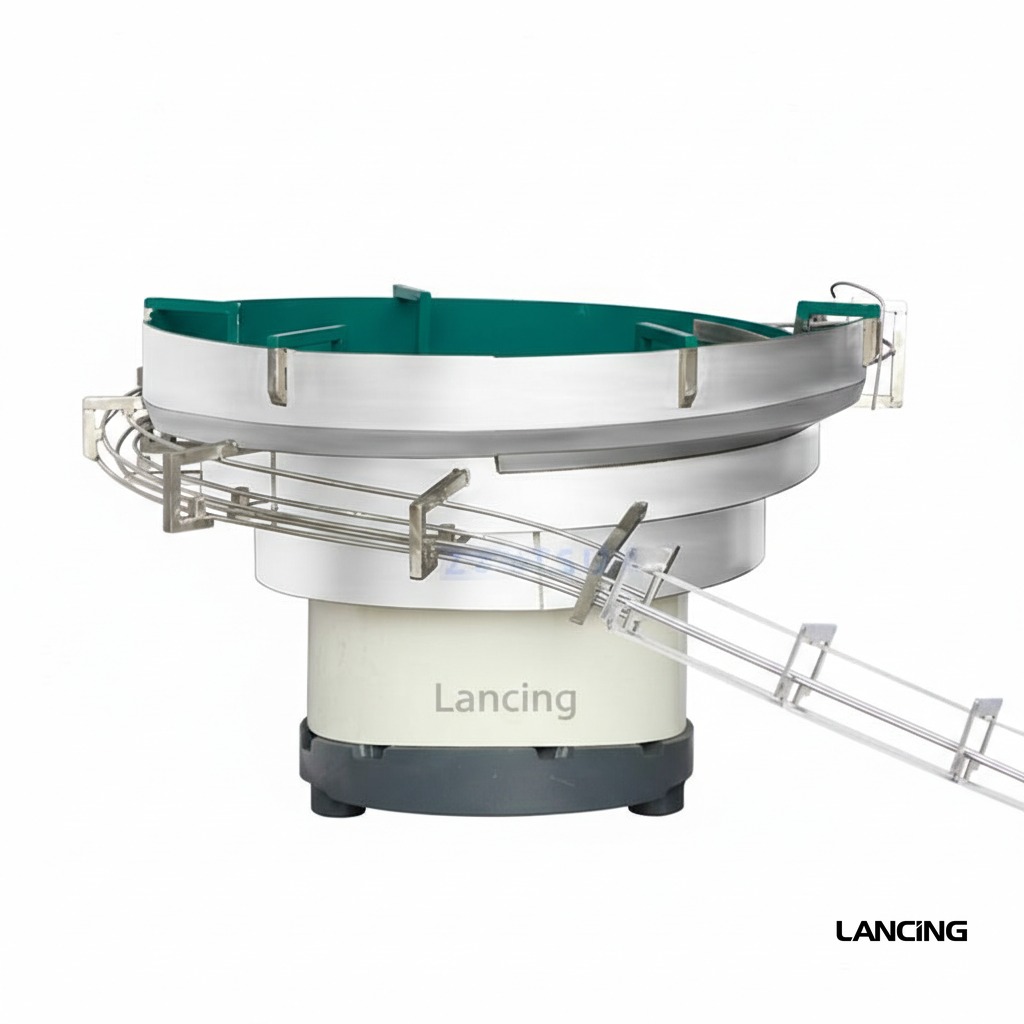
A dedicated machine for automatically presenting, picking and placing pump closures before a separate tightening station or integrated capping section.
View machine detailsConfigured inline system
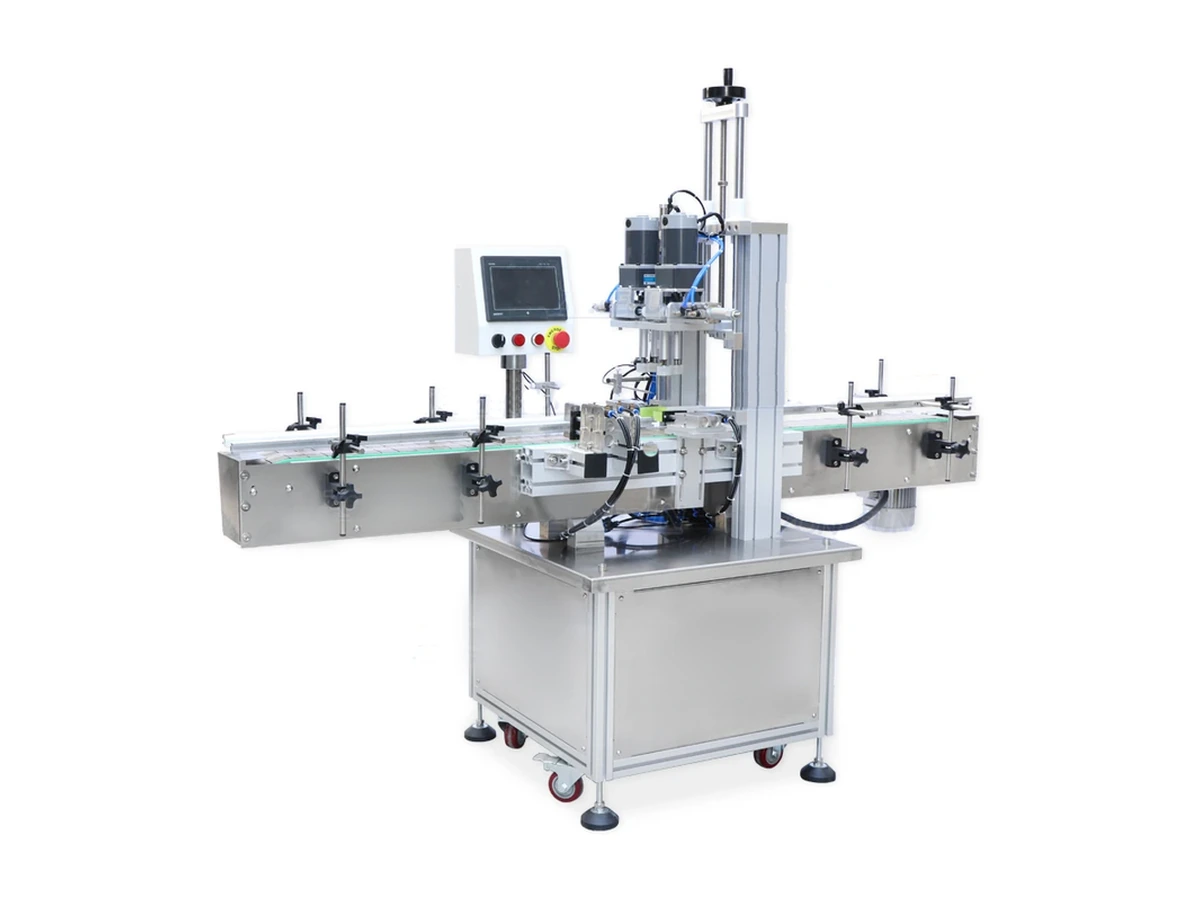
A flexible automatic screw-capping platform for suitable spray and pump closures, using in-line bottle control and powered capping modules.
View machine detailsNext step
Send sample photographs, dimensions, planned formats and target output. Physical samples are used to confirm handling and the final machine specification.
Verified reference configuration
Rotary pump capping can support high sustained throughput, but the published reference only becomes meaningful when the approved format, line balance and test method are defined.
The first-party Lancing page publishes an output of at least 5,000 bottles per hour for the reference machine. A final project should state which bottle and pump were tested, the accepted component condition, the duration, allowable stops, quality sampling and whether replenishment and normal line interfaces were included. Output should be reported with the acceptance conditions rather than detached from them.
See the Lancing LU-BCM8 reference page for published machine data. The supplied scope must be confirmed by project-specific layout, samples and a formal trial.
Starwheels, pockets, neck guides and capping heads control the bottle and pump through fixed-pitch transfers. Changes in bottle diameter, shoulder shape, neck location, filled weight or closure height can require dedicated format parts. The most difficult pump and the least stable bottle should be considered early because they can determine the turret tooling and transfer geometry for the whole project.
| Published Lancing reference | LU-BCM8 reference value |
|---|---|
| Machine model | LU-BCM8 |
| Published speed | At least 5,000 bottles per hour |
| Power supply | AC 380 V, 50 Hz |
| Air supply | Clean compressed air at 0.5 MPa or above |
| Dimensions | 2000 × 1800 × 2900 mm |
| Weight | 4000 kg |
Final output, quality, utilities, guarding, footprint and format range require confirmation for the approved project scope.
High-output line controls
At high output, small instability at the infeed, pump handover or discharge can create repeated stops and quality variation.
Define bottle accumulation, pitch control and the minimum upstream supply needed to keep the turret loaded without pressure damage. Pump feeding must include adequate buffer and fault visibility. A nominally faster capper will not produce the expected usable output if the pump feeder is frequently replenished, the filler discharges in unstable surges or the downstream conveyor blocks.
Agree how missing, high, tilted, cross-threaded, misdirected or cosmetically damaged pumps are detected. Sample closure height, orientation and the agreed torque/removal-torque method across the run rather than only at start-up. Where automatic inspection or rejection is included, test known faults and prove that rejected packs are contained and counted.
Record format parts, lifting or storage requirements, reference settings and first-off approval. Access should support inspection of capping heads, starwheels, guides, sensors and transfer points without losing calibration. Wear parts and approved lubrication or cleaning tasks should be identified for the real operating environment.
The FAT should state component batches, run duration, target and minimum acceptable output, stop classification, quality sample plan and changeover requirements. Record the number and cause of interventions. A result without the conditions cannot be compared fairly with another proposal or repeated during site acceptance.
Project review
Send the full format matrix, upstream and downstream rates, component samples and acceptance criteria so the rotary route can be assessed correctly.
Rotary project evidence
A rotary or multi-head system should be assessed against sustained accepted output, format stability, pump presentation, bottle transfer and the required campaign length. Starwheel or pocket handling, head engagement, actuator clearance and discharge must be proven with the representative filled pack.
Use the capacity-planning guide to define the measurement basis and the FAT and SAT guide to agree the test duration, quality sampling and deviation record. Connected filler, conveyor and downstream machinery responsibilities should be defined before controls are finalised.