Review samples
Measure the bottle, neck, pump head and tube; record variation and packing method.
Directional closures
Automatic and semi-automatic systems for trigger sprayers used on household, automotive, gardening, janitorial and chemical products.

The engineering challenge
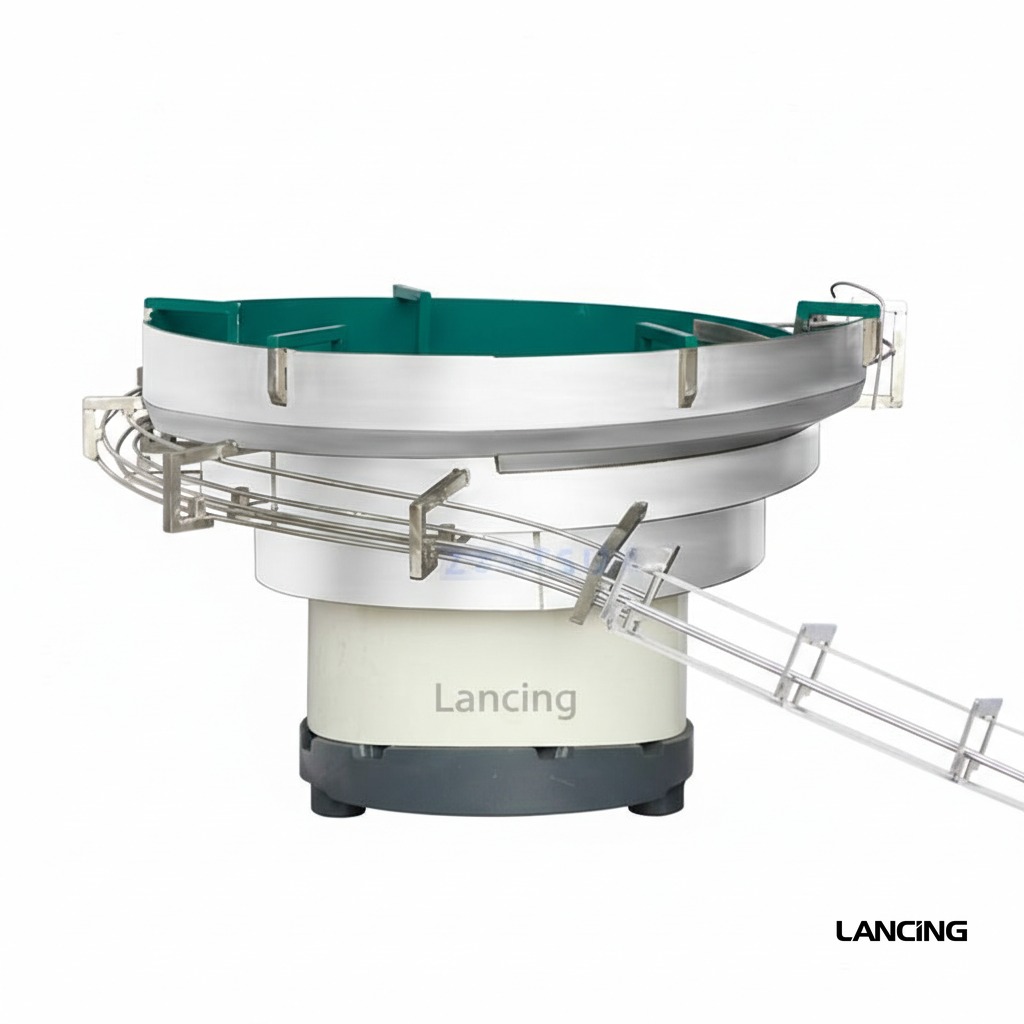
A trigger is highly asymmetric, has a long tube and often needs a defined final direction. Its centre of gravity also makes high-speed bulk feeding more demanding than feeding a simple round cap.
Treat trigger feeding and tightening as one validated system. A fast capper cannot achieve its rated output if the feeder cannot consistently present the trigger.
Recommended process
Start with pack behaviour and acceptance criteria, then select the machine architecture that can sustain the production requirement.
Measure the bottle, neck, pump head and tube; record variation and packing method.
Confirm tube entry, thread start or assembly force with realistic filled-weight bottles.
Choose manual, semi-automatic or bulk-fed presentation based on output and format stability.
Set the tightening or assembly method, bottle support and required change parts.
Document rate, torque, orientation, leaks, damage, rejects and changeover tests.
Suitable configurations
These are starting points. Final selection follows a review of the complete format matrix and production targets.
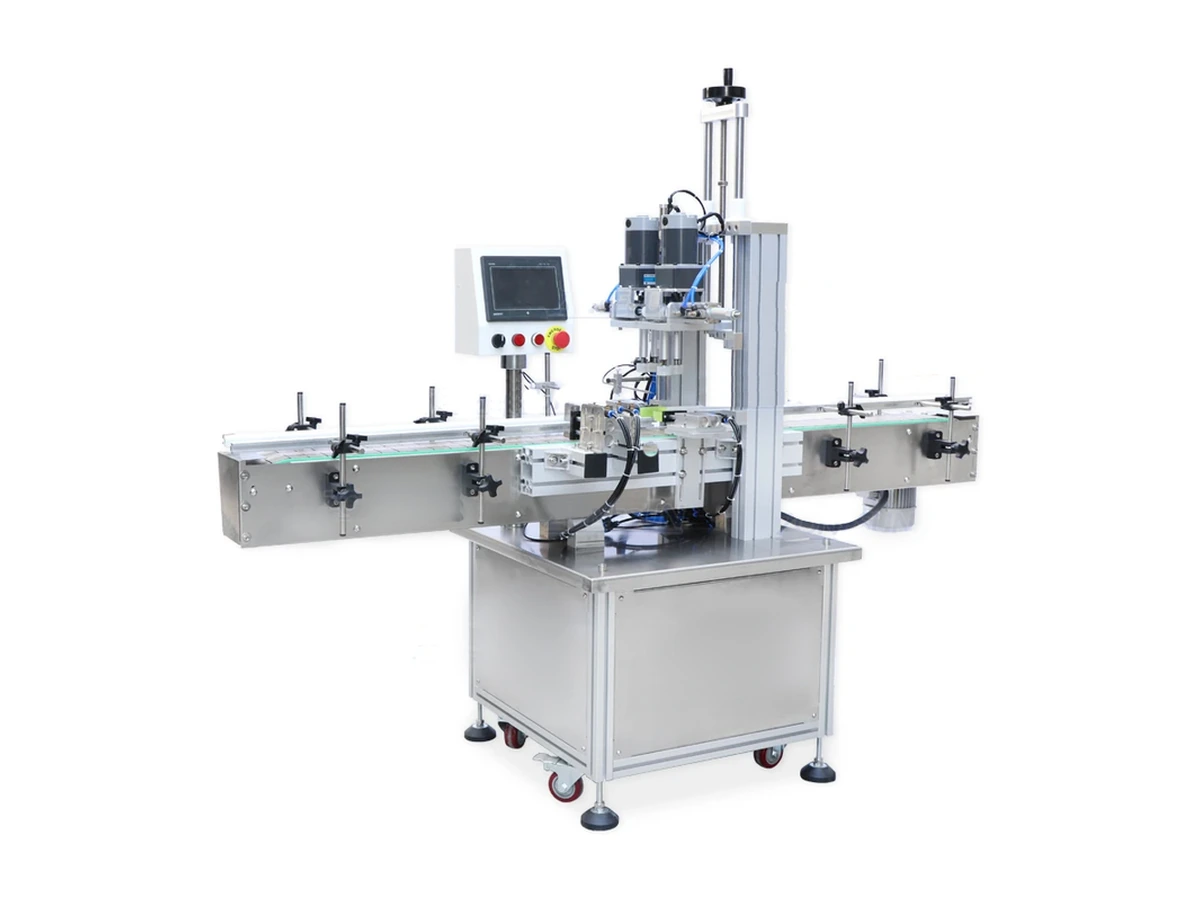
Custom trigger sprayer capper
An automatic capping system engineered for trigger sprayers and dispenser pumps whose head shape, actuator direction and long dip tube require positive orientation and bottle control.
View machine detailsPump-cap feeding configuration
A dedicated machine for automatically presenting, picking and placing pump closures before a separate tightening station or integrated capping section.
View machine detailsConfigured inline system
A flexible automatic screw-capping platform for suitable spray and pump closures, using in-line bottle control and powered capping modules.
View machine detailsPractical answers
Every pump format behaves differently. Final machine selection and performance are confirmed through sample review and agreed trials.
The choice depends on sustained output, batch length, pump presentation, bottle stability and the number of formats. Short runs often suit operator-assisted placement; consistent higher-volume work may justify automatic feeding, placement and tightening.
Potentially, but each design must be assessed as a complete format. Change parts or different feeding methods may be required where actuator shape, tube length, collar size or bottle geometry changes materially.
Enough components are needed to represent normal manufacturing and packing variation and to complete the agreed trial. The quantity depends on the feeding concept, target output and acceptance test.
Yes, through suitable contact materials, controlled guide pressure and format-specific support. Trials should use production-labelled, coated or printed bottles where cosmetic quality is important.
Next step
Share the bottle and closure formats, target output, current process and required acceptance criteria for a focused machinery review.
Compatibility evidence
Trigger sprayers can form part of a mixed pump project, but a trigger-only machine or feeder has distinct directional and long-tube requirements that deserve specialist ownership.
Use this page when lotion pumps, dispenser pumps and trigger sprayers must be compared within one bottle line or investment decision. It can help identify whether one machine platform is realistic or whether specialist equipment is required for the trigger formats.
For trigger-sprayer feeding, directional placement, dedicated trigger machine pages or trigger-specific industries, use Trigger Cappers UK. Use that specialist range for detailed trigger-capping requirements.
Define direction relative to an actual label, handle or moulding feature. Measure it after tightening and discharge. A pump can enter the capper correctly but rotate during thread engagement, so feeder orientation alone is not an acceptance result.
Use production tubes with normal curvature and bottles at realistic weight. Observe insertion, collar squareness, sidewall deformation and transfer. The worst-case tube and least stable bottle should be included in sustained running and fault recovery.
Project review
Send the complete closure mix, bottle range, direction requirements and target output so the correct project owner and machine route can be confirmed.
Trigger and spray evidence
A trigger head can extend beyond the bottle body and may need a defined final direction. The trial should show the bottle datum, closure datum, tube-entry path, pre-threading and guide clearance through tightening and discharge. Tightening torque should not be assumed to produce a repeatable final direction unless representative evidence proves it.
Use the orientation and locking guide and bottle-control guide. This page covers trigger and spray closures within a pump-capping project; specialist trigger-only machinery can also be compared through Lancing’s dedicated trigger-capping resource where useful.
Sprayer selection
A trigger sprayer normally creates a wide directional overhang and a large off-centre mass. A fine-mist or atomiser pump is usually more compact but can have a slender actuator, small nozzle and removable overcap. Both may use long tubes, yet the safe gripping, orientation and downstream-clearance requirements can be different.
For mixed projects, test each closure from normal bulk packaging through tube insertion, initial thread engagement, final direction and discharge. The fine-mist spray pump guide provides the additional checks for atomiser-style closures.