Review samples
Measure the bottle, neck, pump head and tube; record variation and packing method.
Premium airless packs
Capping and assembly approaches for airless pump bottles used in skincare, cosmetics and sensitive formulations.
The engineering challenge
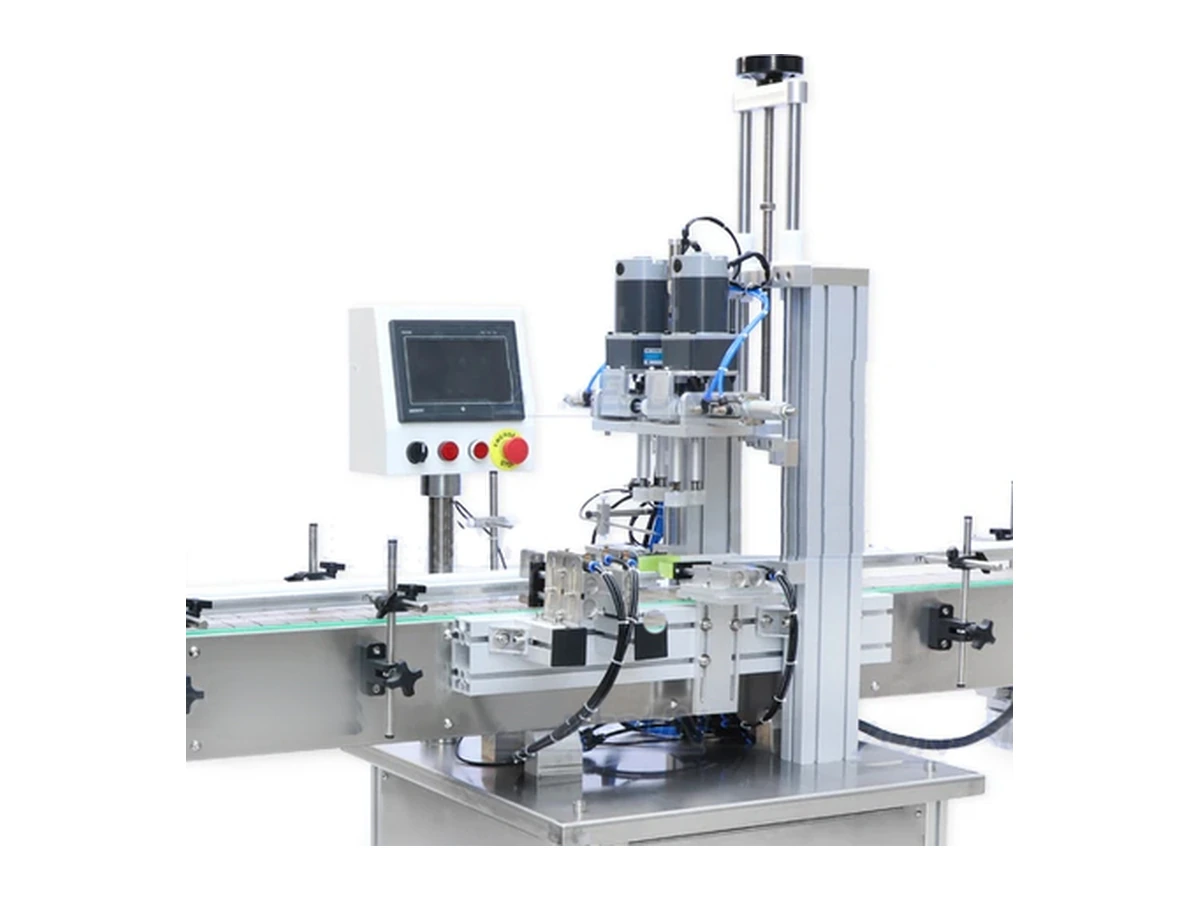
Airless packs vary widely: some use threaded pumps, others snap-fit components or multi-part assemblies. The machine concept must follow the actual pack construction and force profile.
Do not select from cap diameter alone. Provide an exploded pack, closure specifications where available and enough samples to verify assembly force and presentation.
Recommended process
Start with pack behaviour and acceptance criteria, then select the machine architecture that can sustain the production requirement.
Measure the bottle, neck, pump head and tube; record variation and packing method.
Confirm tube entry, thread start or assembly force with realistic filled-weight bottles.
Choose manual, semi-automatic or bulk-fed presentation based on output and format stability.
Set the tightening or assembly method, bottle support and required change parts.
Document rate, torque, orientation, leaks, damage, rejects and changeover tests.
Suitable configurations
These are starting points. Final selection follows a review of the complete format matrix and production targets.
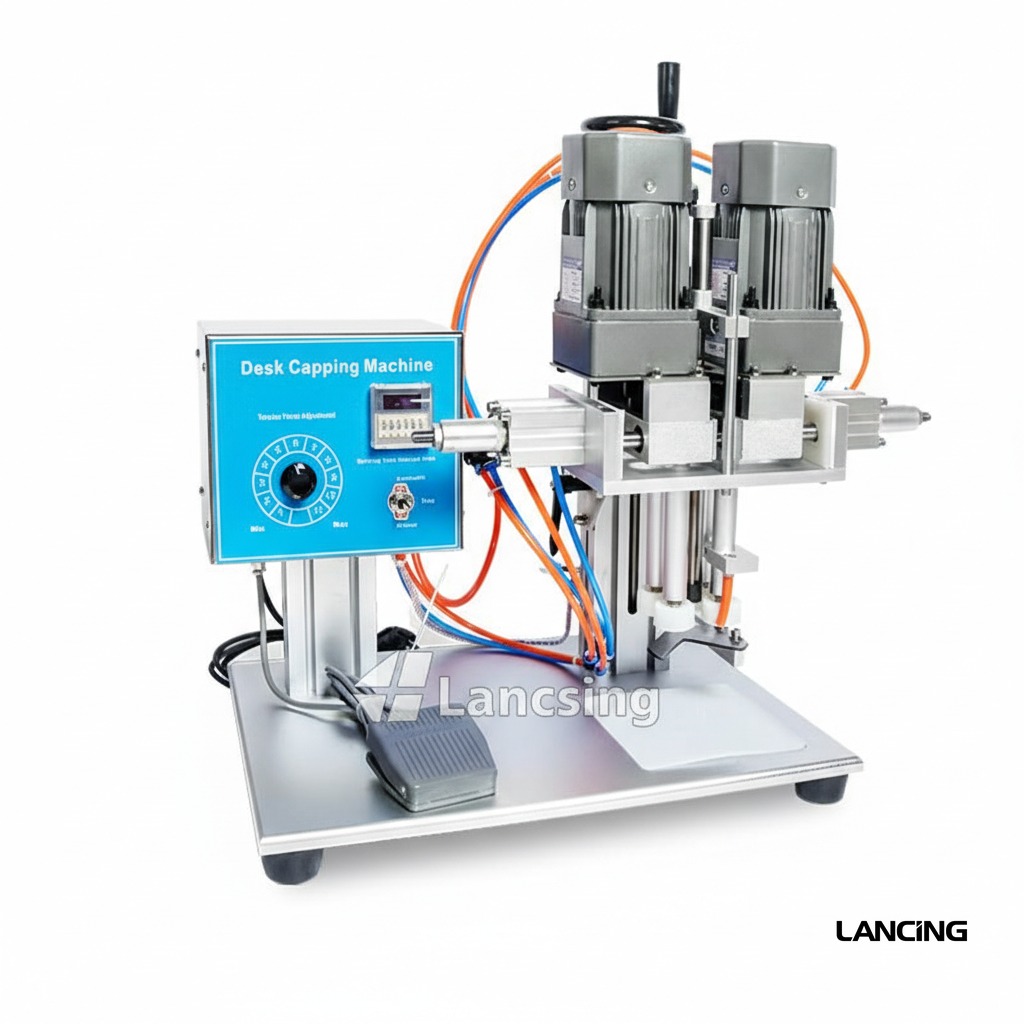
Semi-automatic configuration
A compact pneumatic capping machine for operators who manually place pump closures and need faster, more repeatable tightening than hand capping.
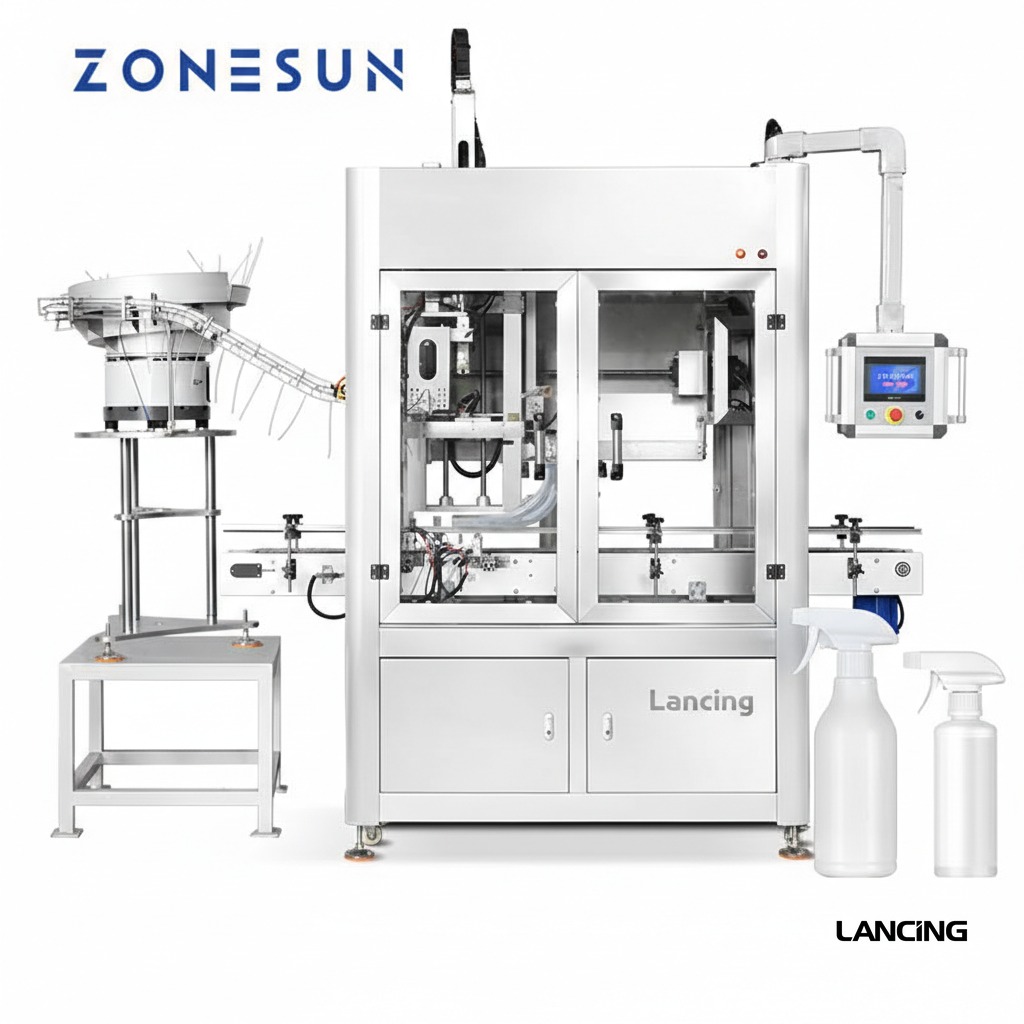
View machine detailsGuarded automatic configuration
A guarded automatic capping platform that can be assessed for pump-compatible applications where enclosure, controlled access and an integrated production-cell format are required.
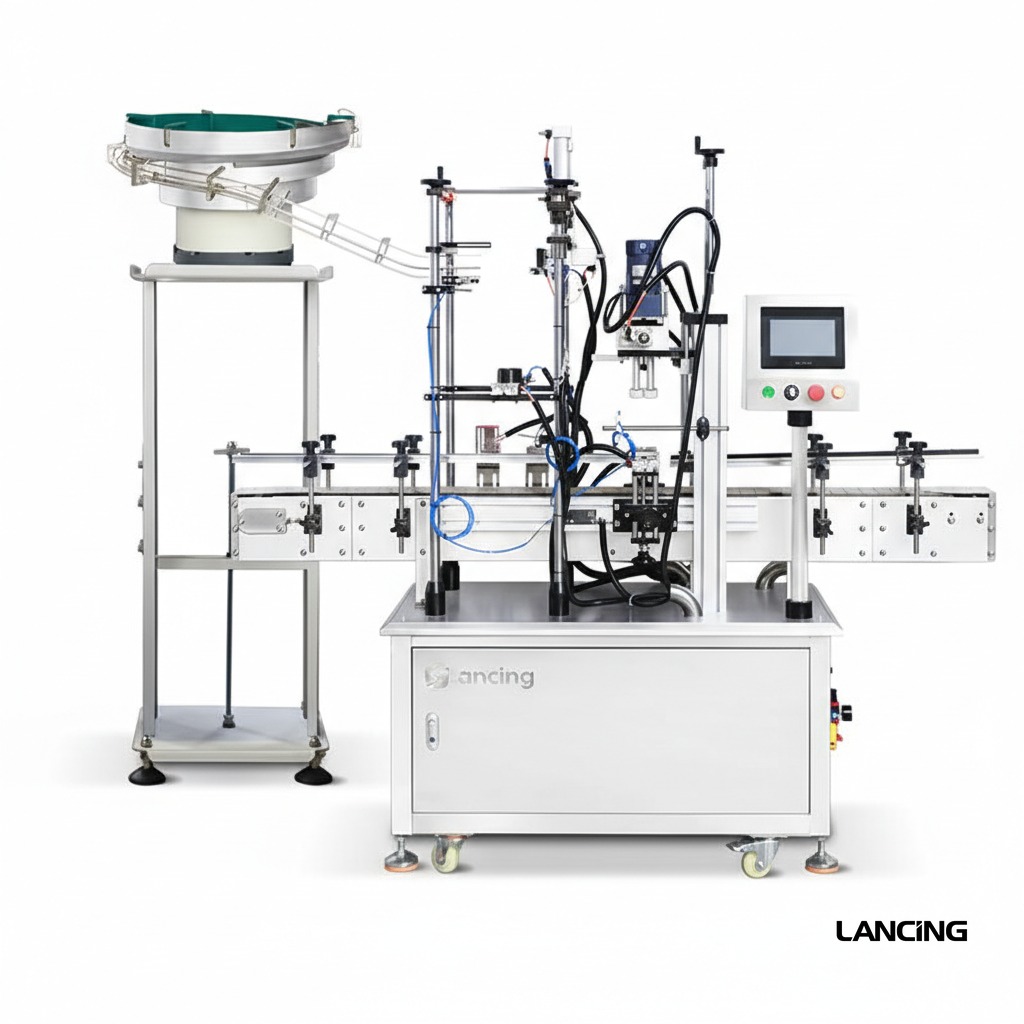
View machine detailsAutomatic inline configuration
An automatic in-line system for placing and tightening pump closures, with bottle handling, closure transfer and powered capping in one compact production cell.
View machine detailsPractical answers
Every pump format behaves differently. Final machine selection and performance are confirmed through sample review and agreed trials.
The choice depends on sustained output, batch length, pump presentation, bottle stability and the number of formats. Short runs often suit operator-assisted placement; consistent higher-volume work may justify automatic feeding, placement and tightening.
Potentially, but each design must be assessed as a complete format. Change parts or different feeding methods may be required where actuator shape, tube length, collar size or bottle geometry changes materially.
Enough components are needed to represent normal manufacturing and packing variation and to complete the agreed trial. The quantity depends on the feeding concept, target output and acceptance test.
Yes, through suitable contact materials, controlled guide pressure and format-specific support. Trials should use production-labelled, coated or printed bottles where cosmetic quality is important.
Next step
Share the bottle and closure formats, target output, current process and required acceptance criteria for a focused machinery review.
Compatibility evidence
Airless packs may use screw collars, snap-fit parts, internal pistons, overcaps or multi-stage assemblies. The project must define which operation the machine performs and which components arrive pre-assembled.
Create a component stack drawing and production sequence. A conventional screw-capping head may suit one collar, while another pack requires pressing, indexed assembly or several stations. Do not select equipment from the final appearance alone.
Airless bottles can be tall, narrow or cosmetically finished. Supports should control the neck and body without damaging the outer shell or disturbing internal components. Trial filled, primed or safely simulated packs when internal movement affects stability.
Small changes in collar, gasket, thread, overcap or actuator can alter assembly force and final height. Use production-intent components and disclose mould or supplier variants. Record which part revision was used for each trial.
Where several parts are assembled, identify the result needed before the next station: component present, correct height, seated position, orientation or torque. Faulty parts should be detected before another operation conceals the defect.
Project review
Send an exploded pack, assembled samples, component drawings and the required production sequence so the correct capping or assembly route can be identified.
Assembly definition
Airless pump packaging can use different assembly methods and component stacks. Provide the complete saleable pack, drawings or supplier information where available, and state which part establishes the seal, final height and actuator condition. Do not select a screw-capping route until the actual closure feature has been verified.
Use the compatibility guide to document each component and the acceptance guide to define assembly height, function, appearance and damage checks. Representative trials should include normal component variation and the intended filled or safely ballasted condition.