
Classify the format
Record the bottle, neck, pump, tube, actuator state, filled weight and surfaces that must not be contacted.
Contract packing application
Build a flexible capping route for changing customer bottles, lotion pumps, spray pumps, batch sizes and production schedules.
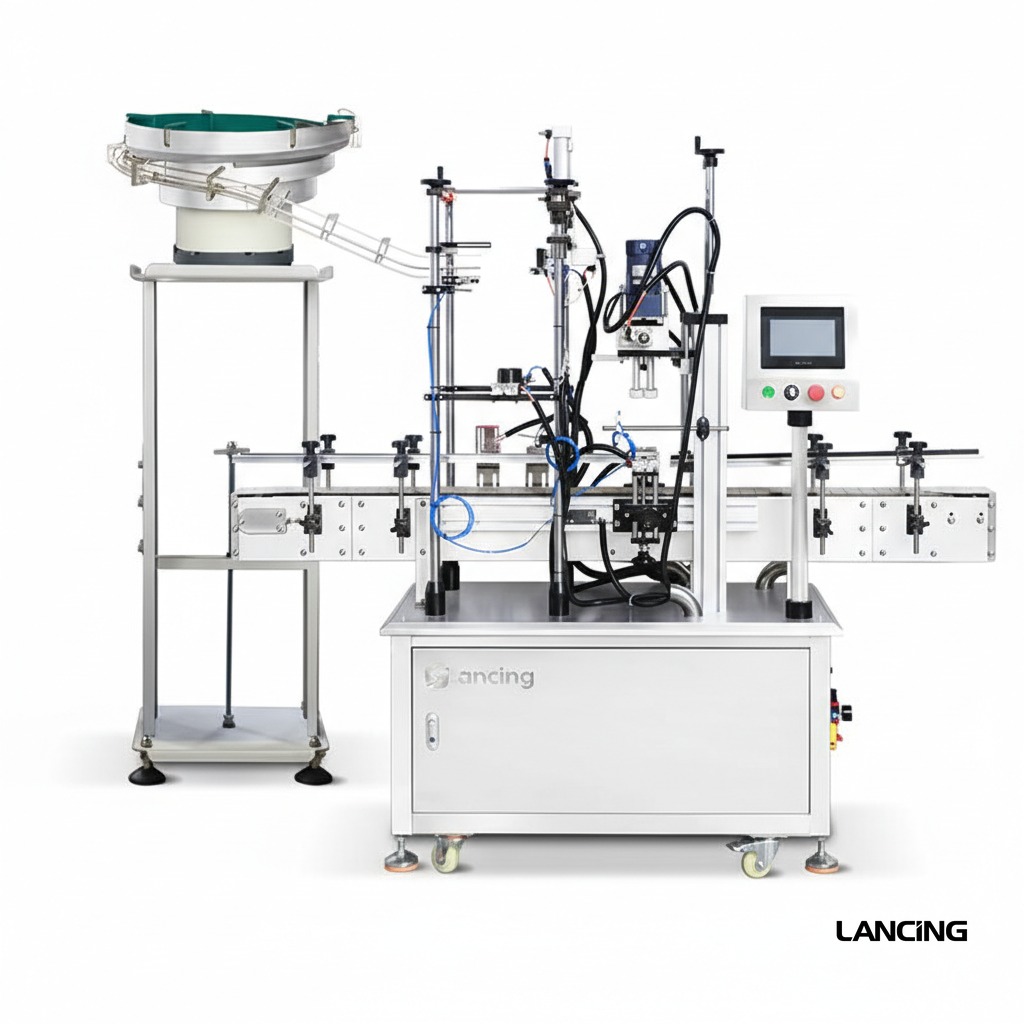
The production challenge
Contract packers need a route that can prove new bottles and pumps quickly, change between approved formats in a controlled way and protect output and quality during short or variable campaigns.
A pump-capping cell may range from operator-assisted placement and controlled tightening to automatic bulk feeding, tube insertion, pre-threading and capping. The correct level of automation depends on the format mix, campaign length, component stability, labour model and required finished-pack evidence.
Because pumps combine an actuator, threaded collar and long dip tube, apparently similar customer packs can behave differently in the feeder, at the bottle neck and during tightening. Use a format matrix and representative trials rather than assuming a nominal closure size proves compatibility.
Recommended process
Contract packing needs a controlled route for onboarding new packs, proving changeovers and protecting quality across variable campaign lengths.
Record the bottle, neck, pump, tube, actuator state, filled weight and surfaces that must not be contacted.
Define batch size, frequency, customer service level, operating hours, staffing and likely future variants.
Use normal bulk packaging and test feeding, tube entry, thread start, tightening, appearance and recovery.
Identify parts, recipes, mechanical settings, cleaning points and the first-off approval sequence.
Measure accepted output and pack quality under the agreed production-style condition.
Machine selection
The same annual quantity can be produced as one stable long run or many short customer campaigns. Those operating models place different value on automatic feeding, quick changeover and operator involvement.
| Production condition | Route to assess | Evidence needed |
|---|---|---|
| Short, varied campaigns | Operator-placed pump with a controlled semi-automatic tightening head. | Repeatable operator sequence, bottle support, first-off approval and realistic cycle study. |
| Stable medium or long campaigns | Automatic placement with inline tightening where component presentation is proven. | Bulk feed, tube-entry, replenishment, sustained output and recovery trial. |
| High format complexity | Modular feeder, placement and capper functions with controlled recipes and change parts. | Format matrix, changeover method, part identification and approved settings. |
| Direction-sensitive packs | Additional bottle and actuator orientation control where the finished position is mandatory. | Defined datums, measurement method and proof that orientation survives tightening. |
| Connected filling line | Integrated conveyor, accumulation, controls, inspection and reject route. | Layout, line speeds, signal schedule, machine boundaries and restart behaviour. |
New-customer onboarding
Ask for enough bottles and pumps to represent routine variation, normal bulk packing, replenishment and a production-style run. Include the longest and most curved approved tubes, more than one component batch where practical, decorated bottles and a safe representation of filled weight.
Capture supplier, component reference, drawing or revision where available, and dated photographs. A new colour, mould, tube material, clip or pump supplier can alter feed and capping behaviour even when the customer describes it as the same pack.
Agree thread engagement, pump seating, closure height, torque or removal-torque method where applicable, actuator state and direction, leakage or handling checks, cosmetic acceptance and reject treatment. Use the pump-closure compatibility guide and FAT and SAT guide to structure the review.
Changeover control
Store each approved set of tooling with an unambiguous identity. Record guide positions, head or belt settings, recipes, sensor positions, feeder settings and the order of adjustment. Photograph difficult setup points and define which parts require inspection before use.
Start every campaign with a controlled first-off pack. The approval should confirm tube entry, thread start, tightening, actuator state, appearance and downstream travel. Where cleaning is required between customers or products, define the machine boundary, dismantling method and release authority using the actual risk assessment and product information.
The maintenance and changeover guide provides a practical framework. For frequent format work, compare the complete changeover burden in the machine cost-factors guide rather than comparing purchase equipment alone.
Line planning
A capper cannot recover capacity that is lost through unstable pump supply, insufficient accumulation, unclear operator work or slow uncontrolled restart.
Define pump container size, loading height, operator travel and whether the feeder can be replenished while the line continues.
Document filler, capper, labeller, coder and packing-station behaviour, including blocked and fault states.
Count packs that meet the agreed checks over a representative run and record every intervention by cause.
Use the pump-capping line integration guide to define transfers and signals, and the output capacity guide to set a production basis that includes operator work and quality sampling.
Suitable machinery routes
Final selection follows a review of representative samples and the full customer-format matrix.
Short and varied runs
Operator placement with a controlled tightening cycle can suit campaigns where flexibility and simple format handling are more important than automatic pump feeding.
Stable production
Integrated feeding, placement and tightening can support sustained production when the pumps, tubes and bottles are proven for automatic handling.
Contract-packing review
Send the bottle-and-pump matrix, batch pattern, target output, available operators and required line interfaces for a practical machinery review.